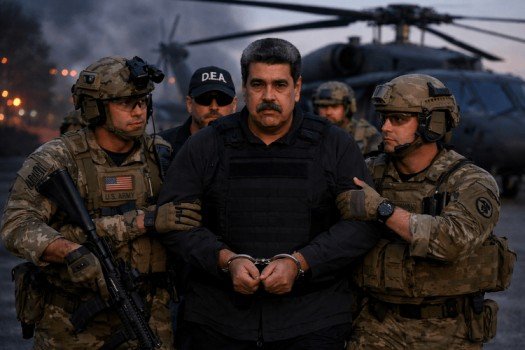



The United States has claimed responsibility for striking a facility inside Venezuelan territory allegedly connected to international drug trafficking, a development that could mark a significant turning point in the long-running confrontation between Washington and Caracas.
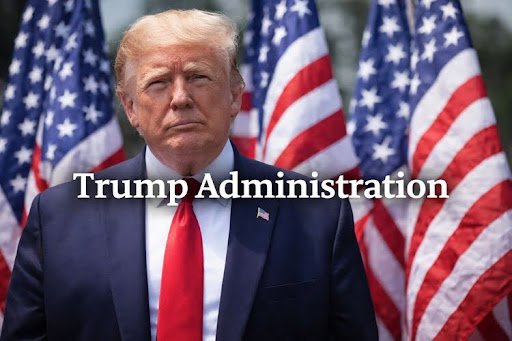
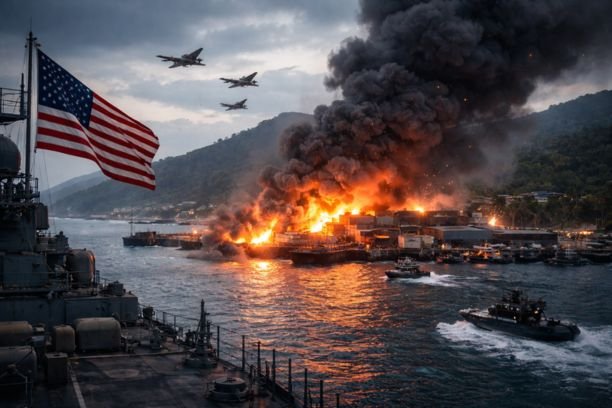
U.S. President Donald Trump announced that American forces “hit” a dock facility along Venezuela’s coastline that he said was being used to load boats involved in large-scale narcotics smuggling operations. According to the statement, the strike caused a major explosion and disrupted what the administration described as a critical logistical hub for drug traffickers operating in the region.
While the claim has drawn global attention, the U.S. government has not provided detailed information about the operation. No specific location, timeline, or visual evidence has been released, and officials have not clarified whether the action was carried out by the U.S. military, intelligence agencies, or another arm of the government. The absence of operational transparency has fueled debate both domestically and internationally.
Shift From Sea to Land Operations
If confirmed, the reported strike would represent a notable escalation in U.S. operations related to Venezuela. Until now, American actions have largely focused on maritime interdictions, targeting suspected drug-smuggling vessels in international waters across the Caribbean Sea and the eastern Pacific Ocean.
A strike on Venezuelan land, even if limited in scope, would signal a shift in strategy—one that carries far greater political, legal, and diplomatic consequences. Military analysts note that land-based actions inherently raise the risk of miscalculation and retaliation, particularly when conducted against a state with which the United States has no formal state of war.
Part of an Expanding Anti-Drug Campaign
The claimed strike comes amid a broader U.S. campaign aimed at dismantling transnational drug trafficking networks. Washington has repeatedly argued that these networks pose a direct threat to U.S. national security and public health and that extraordinary measures are required to disrupt their operations.
According to U.S. officials, recent months have seen an increase in patrols, surveillance flights, and precision strikes targeting vessels suspected of transporting narcotics. The administration has framed these actions as part of a wider effort to choke off supply routes before drugs reach U.S. borders.
Venezuela has been frequently mentioned in this context, with American leaders accusing elements within the country of enabling or benefiting from trafficking operations. The Venezuelan government has categorically rejected these claims, calling them unfounded and politically motivated.
Silence From Caracas
As of the latest developments, Venezuelan authorities have not issued an official response confirming or denying that a U.S. strike took place on their territory. The silence has added to uncertainty surrounding the incident, particularly in the absence of independent verification.
Historically, Caracas has denounced U.S. military actions and sanctions as violations of sovereignty and acts of aggression. Venezuelan officials have often accused Washington of using drug-related allegations as a justification for interventionist policies aimed at undermining the country’s leadership.
Observers say a delayed or measured response from Venezuela could indicate a desire to avoid immediate escalation, though the situation remains fluid.
Legal and Political Fallout
The claim of a U.S. strike inside Venezuela is expected to intensify debate over the legal authority for such operations. International law experts have long questioned the legality of unilateral military action within another sovereign state, particularly when there is no clear international mandate or imminent threat.
Within the United States, the issue has reignited discussions over presidential war powers. Lawmakers remain divided over how much latitude the executive branch should have to conduct military operations without explicit congressional approval, especially when actions extend beyond traditional battlefields.
Critics warn that setting a precedent for cross-border strikes under the banner of counter-narcotics enforcement could have far-reaching implications for international norms and global stability.
Regional and Global Implications
Across Latin America and the Caribbean, the reported strike has raised concerns about rising militarization in the region. Several governments have previously expressed unease over increased U.S. naval and air activity near their borders, warning that such actions could destabilize an already fragile geopolitical environment.
Analysts caution that further escalation could impact energy markets, migration flows, and regional security cooperation. Venezuela remains a key player in global oil markets, and heightened tensions could complicate trade routes and diplomatic engagement.
At the global level, the incident is likely to draw scrutiny from international institutions and foreign governments wary of renewed great-power intervention in Latin America.
An Uncertain Path Ahead
For now, both Washington and Caracas appear entrenched in their positions. The U.S. administration has shown no sign of slowing its anti-drug operations, while Venezuela continues to reject accusations and defend its sovereignty.
Whether the claimed strike represents a one-time action or the beginning of a broader campaign remains unclear. What is evident, however, is that the episode has added a new layer of volatility to U.S.–Venezuela relations at a time when diplomatic ties are already severely strained.
As 2026 approaches, the situation underscores the delicate balance between security objectives and the risks of escalation—one that could shape the future of regional politics in the Western Hemisphere.