


Law is the bedrock of modern civilization. From the traffic signals on our streets to the complex international agreements governing global trade, law shapes every interaction between individuals, businesses, and governments. In a world defined by rapid technological innovation and global interconnections, legal systems provide the essential structure that keeps society functioning. This clearly highlights the Importance of Law in Modern Society, as it helps us understand how these rules protect our rights, maintain order, and drive economic progress.
In essence, laws act as the invisible framework that ensures modern society operates in a fair and organized manner.
The Critical Difference: Law vs. Ethics
To understand the legal system, we must first distinguish it from morality. While ethics represent our internal moral compass, laws are the enforceable rules of the state.
| Aspect | Law | Ethics |
| Definition | Official rules enforced by the state. | Moral principles guiding behavior. |
| Enforcement | Courts, police, and legal penalties. | Social expectations and personal conscience. |
| Example | Theft is illegal and punishable. | Lying to a friend is unethical but legal. |
1. The Growing Importance of Law in Modern Society

The primary role of law is to prevent disorder. Laws define clear boundaries for acceptable behavior, ensuring that people understand the consequences of their actions, which highlights the importance of law in modern society.
For example, traffic laws regulate the movement of vehicles to prevent chaos on the roads. Similarly, criminal laws deter harmful acts like theft or fraud. By establishing these rules, the law creates a stable environment where individuals can live and work without constant fear of injustice.
2. Protection of Rights and Freedoms

One of the key aspects that highlights the importance of law in modern society is its role in protecting individual rights and freedoms. Modern legal systems act as a shield for citizens, ensuring that everyone is treated fairly and safeguarded from discrimination, injustice, or abuse of power. Through well-defined laws and regulations, governments protect fundamental freedoms such as freedom of speech, religion, and personal safety. This protection helps create a society where individuals can live with dignity, equality, and security.
3. The Rule of Law: Idealism vs. Reality
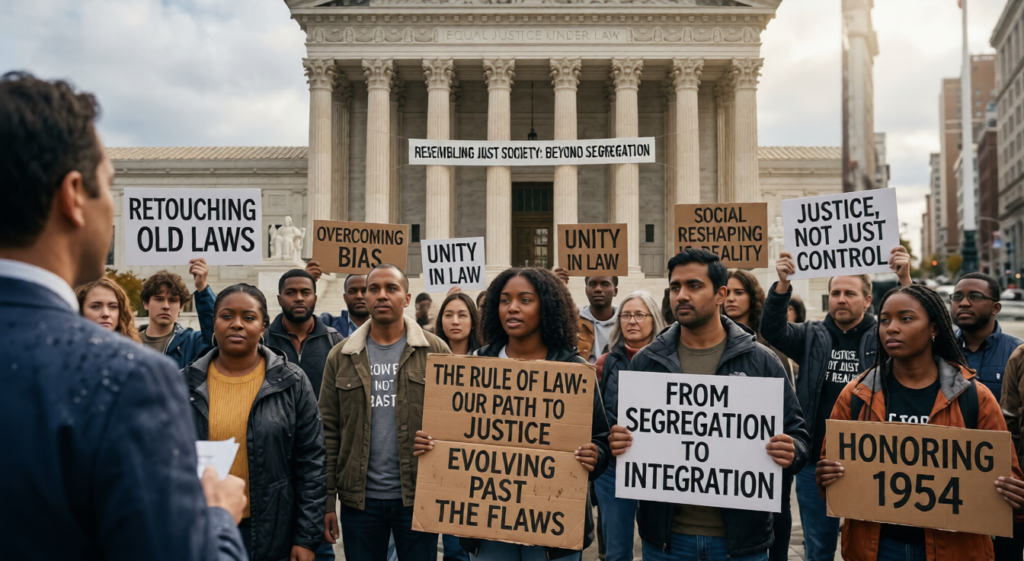
It is important to acknowledge that laws are created by humans and can sometimes be flawed or biased. However, a healthy society operates under the Rule of Law—the principle that everyone, including leaders, is subject to the law.
This differs from Rule by Law, where authorities use the legal system as a tool for control. Over time, laws evolve to correct past mistakes. A landmark example is Brown v. Board of Education (1954), where the U.S. Supreme Court ruled that racial segregation in schools was unconstitutional, demonstrating how the law can be a powerful force for social reshaping and justice.
4. Driving Economic Growth
Clear and predictable laws are vital for a healthy economy. When businesses have confidence in contract enforcement and property rights, they are more likely to invest and innovate. This reflects the importance of law in modern society, as strong legal frameworks create a stable environment where businesses can grow and economic activity can flourish.
According to the World Bank’s B-READY 2026 assessment, economies with high “Regulatory Framework” scores see significantly better private sector development. In India, the digitization of business processes via the Udyam portal has simplified compliance, contributing to a massive surge in entrepreneurship and job creation.
5. Safeguarding Public Safety
Laws exist to protect us from hazards in our daily lives, from the food we eat to the places we work. The impact of these regulations is measurable:
- Workplace Safety: Since the establishment of the Occupational Safety and Health Administration (OSHA), workplace fatalities in the U.S. have dropped by roughly 60%.
- Current Trends: As of February 2026, Bureau of Labor Statistics data shows that fatal work injuries continue to decline (dropping 4% in the latest annual census) due to stricter adherence to safety laws.
- These protections further highlight the importance of law in modern society, as safety regulations help reduce workplace accidents and protect citizens.
6. Adapting to the Digital Frontier
As we move further into 2026, the legal system faces “Legal Lag”—the gap between new technology and the rules meant to govern it. Addressing this challenge highlights the importance of law in modern society, as updated regulations help ensure that innovation develops responsibly and protects the public.
AI and Transparency: New 2026 updates to the EU AI Act and various U.S. state laws (like California’s SB 942) now mandate transparency in AI-generated content to prevent fraud.
Algorithmic Fairness: Regulators are increasingly scrutinizing AI models to ensure they do not perpetuate algorithmic bias in hiring or credit scoring.
Law is a system of rules created and enforced by governments to regulate behavior and maintain order in society.
Law protects rights, maintains social order, resolves disputes, and ensures justice and fairness among citizens.
Legal systems provide protections against discrimination, abuse of power, and violations of fundamental freedoms.
Law consists of official rules enforced by the state, while ethics are moral principles that guide personal behavior.
Conclusion
The importance of law in modern society cannot be overstated. It is the structure that keeps our communities organized, our rights protected, and our economies stable. While laws may sometimes seem restrictive, they ultimately create a balanced system where we can live freely while respecting the rights of others. In essence, laws are the foundation of a fair and functioning world.
For more engaging article visit : boomingwire.com



Leave a Reply