Amanda Walker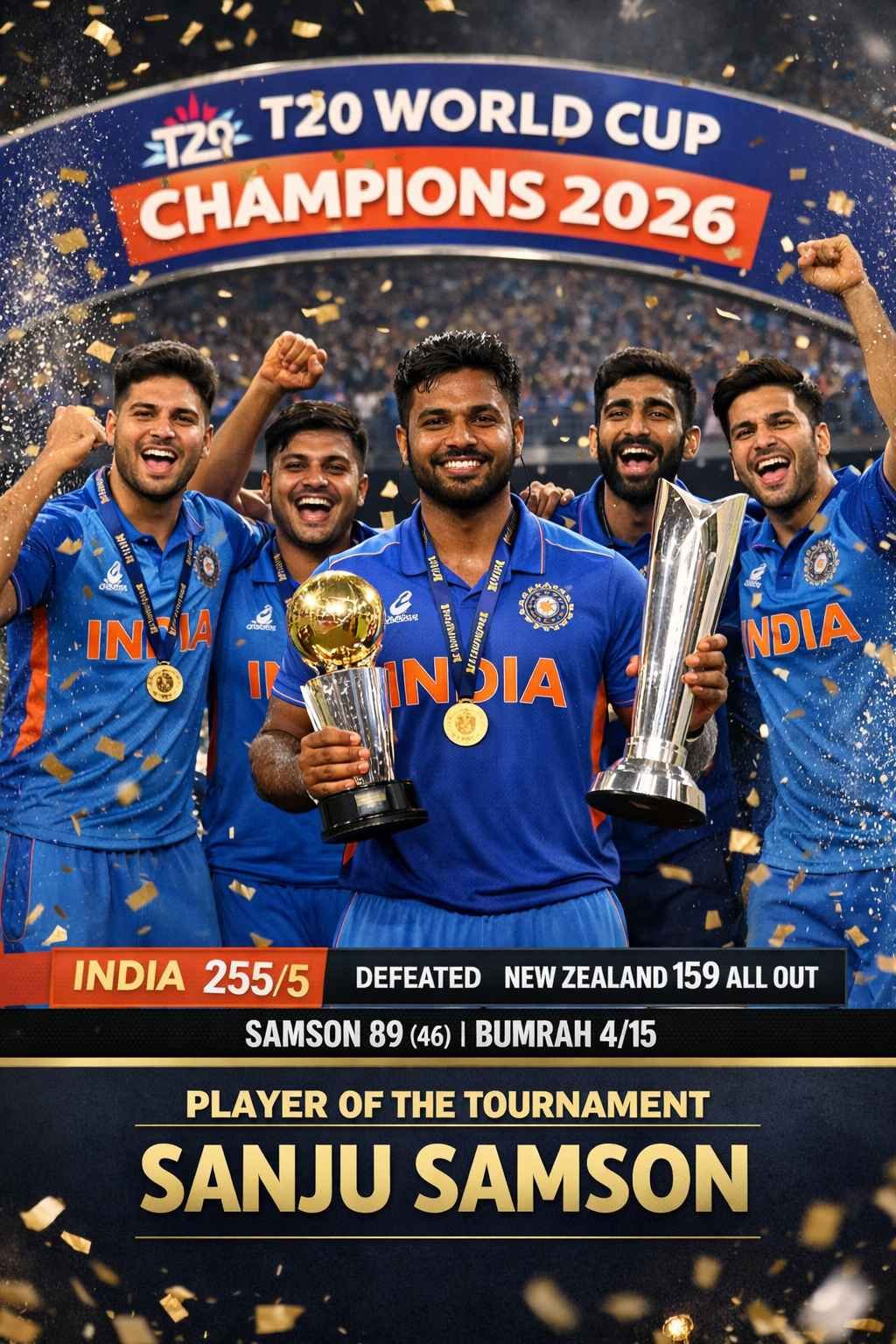
The final was a showcase of pure batting intent. India’s opening pair of Abhishek Sharma (52 off 21) and Sanju Samson (89 off 46) didn’t just set a tone; they decimated the record books. They raced to 92/0 in the first six overs, equaling the all-time T20 World Cup Powerplay record.
The momentum continued as Ishan Kishan (54 off 25) joined Samson, pushing India past 200 in just the 15th over. However, the article’s narrative of a “smooth” total was briefly challenged by a dramatic triple-strike from James Neesham. In the 16th over, Neesham dismissed both set batters and the Indian captain, Suryakumar Yadav (for a golden duck), causing India to slip from 203/1 to 204/4.
This “weak point” in the innings was quickly mended by Shivam Dube, whose brutal 26 off 8 balls* (including 24 runs off the final over) propelled India to a mammoth 255/5—the highest total ever recorded in a T20 World Cup Final.
Clinical Defense & “The National Treasure”
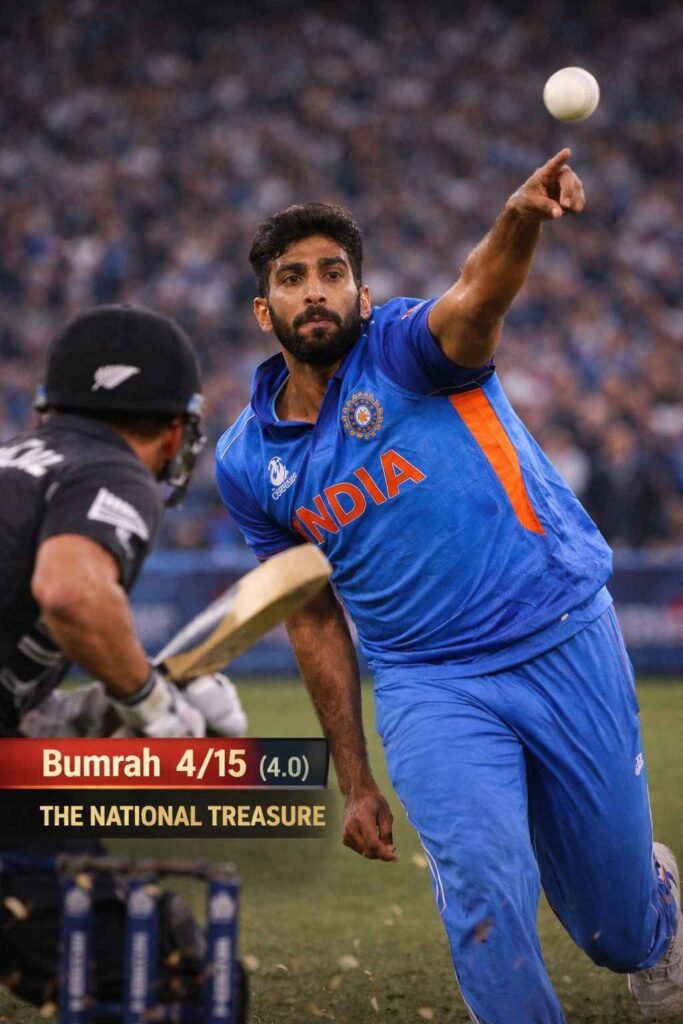
While the batters set the mountain, the bowlers ensured New Zealand never reached the base. Jasprit Bumrah, whom captain Suryakumar Yadav later called a “national treasure,” delivered a masterclass in T20 bowling.
- The Impact: Bumrah’s figures of 4/15 (4.0 overs) earned him the Player of the Match award.
- The Spin Trap: Axar Patel was equally devastating, taking 3/27 and removing dangerous threats like Glenn Phillips and Daryl Mitchell.
- The Result: Despite a fighting 52 from Tim Seifert, New Zealand was bundled out for 159, handing India a massive 96-run victory—the largest ever margin in a T20 World Cup final.
The Redemption of Sanju Samson
The most informative addition to the 2026 story is the individual brilliance of Sanju Samson. After not playing a single game in the 2024 triumph, Samson finished this tournament with 321 runs at a staggering strike rate of 199.37.
His performance earned him the Player of the Tournament award, as he surpassed Virat Kohli’s 2014 record (319 runs) for the most runs by an Indian in a single T20 World Cup edition. Samson’s 89 in the final also stands as the highest individual score ever in the history of the tournament’s summit clash.
Quick Stats: India’s 2026 Glory
| Category | Performer | Record/Stat |
| Final Result | Team India | Won by 96 runs |
| Highest Score (Final) | Sanju Samson | 89 (46) (World Record) |
| Best Bowling (Final) | Jasprit Bumrah | 4/15 |
| Tournament MVP | Sanju Samson | 321 Runs (SR: 199.37) |
| Highest Team Total | Team India | 255/5 (World Record) |
Summary of Improvements Made:
- Corrected the “Batting Stability” narrative: Replaced the idea of stability with the actual record-breaking Powerplay (92 runs).
- Added the “Triple Strike” Drama: Mentioned James Neesham’s over to add realistic tension to the match report.
- Highlighted Individual Achievements: Included Sanju Samson’s record-breaking run and Bumrah’s “Player of the Match” stats.
- Updated Conclusion: Framed the win as a “triple crown” (2007, 2024, 2026), making India the most successful team in T20 history.
The Legacy of the 2026 Triumph
India’s emphatic victory in the 2026 T20 World Cup Final was more than just another title—it marked the beginning of a new era in Indian cricket. By clinching their third T20 World Cup crown (after 2007, 2024, and 2026), India firmly established themselves as the most successful side in the tournament’s history. The manner of the win—dominant with the bat, ruthless with the ball, and fearless in intent—symbolized a modern approach to T20 cricket that few teams could match.
At the heart of this triumph was a perfect blend of youth and experience. Young stars like Abhishek Sharma and Ishan Kishan brought explosive energy at the top of the order, while seasoned performers like Sanju Samson and Suryakumar Yadav provided leadership and composure in high-pressure moments. Their aggressive philosophy ensured that India dictated the tempo of games rather than reacting to opponents.
Equally crucial was the bowling unit, led by the brilliance of Jasprit Bumrah. His ability to control the game in both the powerplay and death overs turned him into the backbone of India’s defense. Alongside him, the spin duo of Axar Patel and the supporting attack created constant pressure, ensuring that even large totals were defended with clinical precision.
Sanju Samson’s Defining Moment
For Sanju Samson, the 2026 tournament was a story of redemption and arrival. After watching India lift the trophy from the sidelines in 2024, Samson returned determined to make his mark. His fearless batting throughout the tournament culminated in a breathtaking 89 in the final, an innings that blended power, timing, and calculated aggression.
Breaking Virat Kohli’s 2014 record for the most runs by an Indian in a single T20 World Cup edition, Samson’s 321 runs at a strike rate of 199.37 showcased not only consistency but also dominance. His performances ensured that he walked away with the Player of the Tournament award, cementing his place among the tournament’s greatest performers.
A Blueprint for the Future
India’s 2026 campaign also revealed a blueprint for modern T20 success:
- Explosive Powerplays: Attacking from the very first over to put opponents immediately under pressure.
- Deep Batting Line-up: Multiple finishers like Shivam Dube capable of accelerating even after setbacks.
- Specialist Bowling Roles: Bowlers like Bumrah controlling key phases of the innings.
- Fearless Intent: A mindset focused on dominating rather than surviving.
This philosophy transformed India into a team that opponents feared—not just for their talent, but for their relentless aggression.
India won the T20 World Cup 2026 by defeating New Zealand in the final by 96 runs, securing their third T20 World Cup title.
India scored 255/5, which became the highest team total ever recorded in a T20 World Cup final.
Sanju Samson scored 89 runs off 46 balls, the highest individual score in a T20 World Cup final.
Jasprit Bumrah won Player of the Match for his outstanding bowling performance of 4/15 in 4 overs.
Conclusion
The 2026 triumph will be remembered as one of the most commanding performances ever seen in a T20 World Cup final. With record-breaking batting, clinical bowling, and standout individual performances, India didn’t just win the trophy—they set a new benchmark for excellence in the shortest format of the game.
More importantly, it signaled that Indian cricket had entered a golden period where a new generation was ready to carry forward the legacy built by legends of the past. And if the 2026 final was any indication, the future of India in T20 cricket looks brighter—and more dominant—than ever.

 Christine Carter