Amanda Walker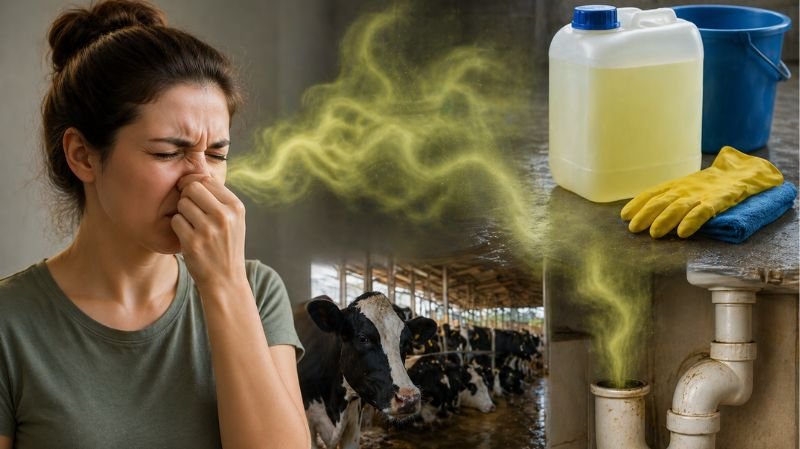
If you’ve ever walked into a poorly cleaned public restroom and felt an instant, almost physical assault on your nose — that sharp, stinging sensation that hits the back of your nostrils before you’ve even fully registered the smell — you’ve encountered ammonia. It’s one of the most recognisable odours in the world, and your brain flags it immediately as a warning.
But what exactly makes it smell the way it does, and how can you confidently identify it? Here’s a thorough, honest breakdown.
The Short Answer
Ammonia has a sharp, intensely pungent smell that is best described as:
- Acrid and biting — harsh rather than sour or sweet
- Alkaline and chemical — distinctly non-natural in character
- Physically stinging — it doesn’t just reach your nose, it irritates it
The key thing that separates it from other strong smells is that it produces a physical sensation, not just an odour. It stings the back of your nasal passage, almost like inhaling steam — but sharper and more aggressive. That sting is your body reacting to the compound irritating the sensitive mucous membranes inside your nose.
What Makes Ammonia Smell So Distinct
It’s Not Just a Smell — It’s a Sensation
Most odours register purely as a scent. NH₃ is different. Even at relatively low concentrations, it triggers a mild burning or stinging sensation deep in the nasal passage and sometimes at the back of the throat. This is because ammonia is highly soluble in water, and the moisture lining your airways reacts with it almost instantly.
This is actually the most reliable way to identify ammonia: if you’re not sure whether what you’re smelling is NH₃ or just another strong chemical, notice whether it stings. If it does, there’s a strong chance you’re dealing with ammonia.
It Has No Sweetness, No Earthiness, No Sourness
Ammonia is chemically alkaline, which gives it a fundamentally different character from other strong smells people often confuse it with:
- Unlike vinegar, which is acidic and has a sharp, sour quality, NH₃ is alkaline — it hits differently in the nose, more aggressively and less tangy
- Unlike bleach, which carries a distinctly chlorine-like, pool-water edge, NH₃ has no chlorine quality at all
- Unlike sulphur (the “rotten egg” smell), NH₃ has nothing earthy or organic about it — it’s purely chemical
- Unlike mould, which smells musty and damp, ammonia is sharp and dry even though it is technically water-soluble
If the smell you’re experiencing is sour, sulphuric, or chlorine-scented, it probably isn’t ammonia.
Everyday Sources of Ammonia You’ve Already Encountered
1. Glass and Surface Cleaners
Open a bottle of any strong glass cleaner — that sharp, nose-wrinkling chemical smell is predominantly NH₃. It’s added because it’s alkaline, which makes it highly effective at breaking down oily, acidic residues on glass and hard surfaces. Grease from fingerprints and cooking splatter is acidic; the alkaline NH₃ neutralises and lifts it. That’s the chemistry behind why it cleans so well — and why it smells so strong.
2. Urine — Especially Old or Concentrated
Urine contains urea, which bacteria break down into NH₃ over time. This is why:
- Neglected public restrooms develop that sharp, eye-watering smell
- Cat litter boxes that aren’t cleaned frequently become almost unbearable — cats produce highly concentrated urine, which releases NH₃ rapidly
- Baby nappies left too long develop that same harsh odour
Fresh urine has relatively little ammonia. The longer it sits, the more urea breaks down, and the stronger the ammonia smell becomes.
3. Sweat After Intense Exercise or High-Protein Diets
Sometimes sweat can take on a faint ammonia-like smell, particularly after long or very intense workouts. This happens when the body runs low on carbohydrates and starts breaking down protein (amino acids) for energy instead. A byproduct of that process is NH₃, which is then excreted through sweat. It’s more common in endurance athletes and people following very low-carb or high-protein diets. If your gym clothes sometimes smell faintly of ammonia even after washing, this is likely why.
4. Fertilisers and Agricultural Environments
Nitrogen-based fertilisers — which are among the most widely used in agriculture — contain NH₃ compounds. Driving past farmland that’s recently been fertilised, or entering a farm supply store, will often produce a noticeable ammonia smell. Large-scale livestock farming also produces significant ammonia from animal waste.
5. Industrial Settings
Ammonia is used widely in industrial refrigeration systems, chemical manufacturing, and water treatment. Workers in these environments are routinely exposed to it, and proper ventilation is essential.
Is the Smell Dangerous?
Ammonia’s smell is actually a built-in safety mechanism — humans can detect it at very low concentrations, which gives us early warning before levels become harmful.
Here’s a practical breakdown:
| Concentration | What Happens |
|---|---|
| ~1–5 ppm | Most people can detect the smell |
| ~25 ppm | OSHA’s recommended maximum for workplace exposure over an 8-hour shift — causes noticeable irritation |
| ~50 ppm | Eyes begin to water; throat irritation becomes significant |
| ~300 ppm | Immediately dangerous — causes severe respiratory distress |
(ppm = parts per million in air)
In everyday household situations — cleaning products, litter boxes — you’re unlikely to encounter dangerous concentrations, especially in ventilated spaces. The smell will be unpleasant long before it becomes dangerous, which is the point.
However: If you’re in an enclosed space and the smell is strong enough to make your eyes water, cause a cough, or produce a burning feeling in your nose or throat, leave immediately and get fresh air. In industrial or agricultural settings with potential for leaks, take any strong ammonia smell seriously.
A Reliable Way to Identify It
If you’re trying to confirm whether what you’re smelling is NH₃, use this mental checklist:
- Does it sting the back of your nose? Ammonia has a distinct physical sting, not just an odour
- Is it sharply chemical, with no sourness, sweetness, or earthiness? NH₃ is purely alkaline in character
- Does it make your eyes water or throat tighten at stronger concentrations? This is a reliable indicator
- Is there a logical source nearby? Cleaning products, animal waste, fertilisers, industrial equipment
If you tick three or four of those boxes, you’re almost certainly smelling ammonia.
Final Thought
Ammonia is one of those smells that needs no second guess — your body reacts to it before your brain fully processes it. That instinctive recoil is biology working correctly. Understanding what it smells like, where it comes from, and what levels to be cautious about turns that reflexive reaction into something genuinely useful. You’ll be better equipped to spot hygiene problems, identify chemical exposure, and make smart decisions about ventilation and safety — all from recognising one very distinctive smell.