Amanda Walker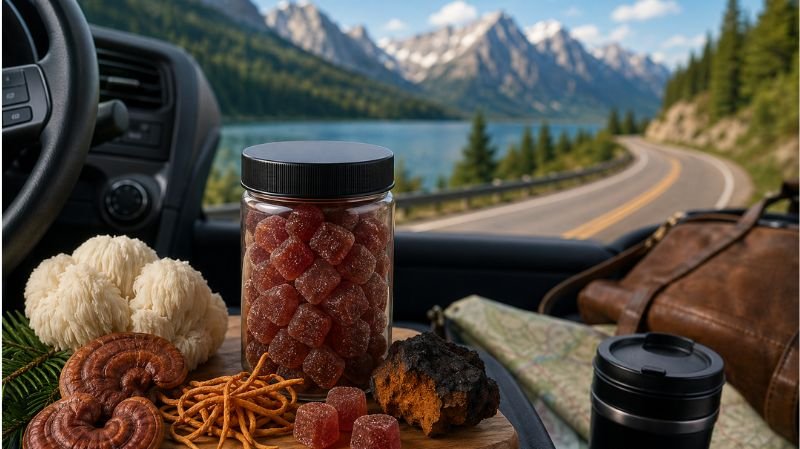
Road trips have always held a special place in our culture. Whether it’s a weekend escape, a cross-country adventure, or a spontaneous drive with no fixed destination, the experience is about freedom, exploration, and presence. But let’s be honest — long hours on the road are also physically draining and mentally exhausting. Staying alert, calm, and focused for hours at a time is genuinely hard work.
That’s exactly why a growing number of travelers are turning to functional mushroom gummies: portable, natural supplements designed to support steady energy, mental clarity, and stress resilience — without the crashes and jitters that come from caffeine and sugar overload.
This guide covers everything: what functional mushroom gummies are, the science behind each mushroom type, the best products on the market in 2026, how and when to take them, and answers to the most common questions travelers have. If you’ve been curious but unsure, you’ll have a clear, complete picture by the end.
What Are Functional Mushroom Gummies?
Functional mushroom gummies are dietary supplements made using concentrated extracts from medicinal mushrooms — a category distinct from both culinary mushrooms (like the ones on your pizza) and psychedelic mushrooms (which contain psilocybin and are illegal in most regions).
The word ‘functional’ refers to mushrooms that have been studied and used for centuries in traditional Chinese and Ayurvedic medicine for their potential health-supporting properties. Modern nutritional science has increasingly validated many of these traditional uses, particularly around energy metabolism, cognitive function, and immune support.
These extracts are infused into chewable gummies — a delivery format that makes them easy to dose, carry, and consume without water, which is exactly what you need when you’re four hours into a highway drive.
The most commonly used mushrooms in travel-focused gummies include:
- Lion’s Mane (Hericium erinaceus) — associated with cognitive support, focus, and nerve health
- Cordyceps (Cordyceps militaris) — linked to natural energy production and physical endurance
- Reishi (Ganoderma lucidum) — categorised as an adaptogen, often used for stress resilience and calm
- Chaga (Inonotus obliquus) — valued for its high antioxidant content and immune support
None of these are psychoactive. They do not cause hallucinations, impair driving, or produce any mind-altering effects — we address this important distinction in full detail below.
The Science Behind Each Mushroom Type
Unlike many wellness trends that rest purely on anecdote, functional mushrooms have a meaningful body of peer-reviewed research behind them. Here is what the current science says about each type.
Lion’s Mane — Cognitive Support and Focus
Lion’s Mane contains two unique groups of compounds — hericenones and erinacines — that have been shown in laboratory studies to stimulate the production of Nerve Growth Factor (NGF), a protein essential for the growth and maintenance of neurons.
A randomised, double-blind, placebo-controlled study published in Phytotherapy Research (2009) found that adults aged 50–80 who took 3g of Lion’s Mane daily for 16 weeks showed significantly improved cognitive function scores compared to the placebo group. While more large-scale human trials are needed, the early evidence is promising and consistent with centuries of traditional use.
For road trippers, the practical implication is support for sustained attention and mental clarity — the kind of focused awareness that long-distance driving demands.
Cordyceps — Natural Energy Without the Jitters
Cordyceps has been used in Tibetan and Chinese medicine for over 1,000 years as an energy tonic. Modern research suggests its effects are rooted in its ability to increase adenosine triphosphate (ATP) production — essentially enhancing how efficiently your cells generate and use energy.
A study published in the Journal of Alternative and Complementary Medicine (2010) found that Cordyceps supplementation significantly improved oxygen utilisation and reduced fatigue in older adults during exercise. Unlike caffeine, which works by blocking adenosine receptors (causing the eventual crash), Cordyceps supports energy at a cellular level, which may explain why users report sustained energy rather than sharp peaks and drops.
Reishi — Stress Adaptation and Calm Alertness
Reishi is perhaps the best-studied adaptogen in the mushroom family. Adaptogens are substances that may help the body regulate its physiological response to stress — not by sedating you, but by modulating cortisol and other stress hormones to produce a more balanced response.
Research published in the Journal of Medicinal Food has documented Reishi’s bioactive compounds (particularly triterpenes and beta-glucans) for their potential anti-inflammatory and immunomodulatory effects. For drivers, the benefit is not sedation — it’s calm alertness. Many users report feeling less reactive to traffic frustrations and more emotionally regulated during long hauls.
Chaga — Antioxidant Protection During Travel
Travel exposes the body to oxidative stress: disrupted sleep, processed food, environmental exposure, and physical inactivity all increase free radical production. Chaga has one of the highest ORAC (Oxygen Radical Absorbance Capacity) scores of any natural food, meaning it’s extraordinarily rich in antioxidants.
While direct studies on Chaga’s effects during travel are limited, its well-documented antioxidant profile makes it a reasonable complement to a travel wellness routine, particularly for frequent long-distance drivers.
| Scientific note
While the research on functional mushrooms is promising and growing, most studies are small-scale or conducted in vitro. These supplements should be understood as supportive wellness tools, not medical treatments. If you have a health condition or take prescription medications, consult your doctor before use. |
Why Travelers Are Choosing Mushroom Gummies Over Traditional Energy Boosters
The shift away from caffeine-and-sugar road trip fuel isn’t just a wellness fad — it’s a practical response to the very real problems that come with conventional energy boosters.
The typical road trip energy toolkit has long included strong coffee, energy drinks, sugary sodas, and candy. These options share a common pattern: a rapid rise in alertness followed by an equally rapid crash, often leaving you more fatigued than before. Energy drinks in particular have been linked to increased heart rate, anxiety, and dehydration — none of which help when you’re navigating a busy interstate.
Functional mushroom gummies operate differently. Because they support energy at a metabolic level (rather than by stimulating the central nervous system) and work on stress adaptation rather than cortisol suppression, the experience tends to be smoother. Users describe it less as a ‘buzz’ and more as feeling like a clearer, steadier version of themselves.
The convenience factor also matters enormously. Gummies are pre-dosed, shelf-stable, require no preparation, and take up almost no space in a bag or glove compartment. Compared to brewing coffee at a rest stop or hunting for a specific energy drink brand at a rural gas station, they offer real-world simplicity.
Best Road Trip Mushroom Gummies in 2026: Our Top Picks
Not all mushroom gummies are created equal. The supplement market is poorly regulated, and many products contain far less active ingredient than their labels claim. We evaluated products based on: third-party testing transparency, extract quality (fruiting body vs. mycelium), dosage per serving, ingredient cleanliness, and user reviews.
1. Four Sigmatic Think Mushroom Complex Gummies
Best for: Daily cognitive support and focus
Key ingredients: Lion’s Mane (250mg), Rhodiola Rosea, B vitamins
Price range: ~$35 for 60 gummies
Four Sigmatic is one of the most established and transparent brands in the functional mushroom space. Their gummies use dual-extracted fruiting body extracts and are third-party tested. The addition of Rhodiola provides extra adaptogenic support, making this a strong choice for drivers who deal with mentally demanding routes.
- Pros: Reputable brand, clean ingredients, good dosage
- Cons: On the pricier side; Lion’s Mane dose is moderate rather than high
2. Host Defense MycoBotanicals Brain Gummies
Best for: Long-haul drivers wanting comprehensive focus support
Key ingredients: Lion’s Mane (500mg), Bacopa Monnieri
Price range: ~$30 for 60 gummies
Host Defense is founded by mycologist Paul Stamets, one of the world’s leading mushroom researchers. These gummies combine a higher Lion’s Mane dose with Bacopa, a well-studied herb for memory and focus. The brand’s scientific credibility is among the highest in the category.
- Pros: Higher Lion’s Mane dose, science-backed brand, reasonable price
- Cons: Uses mycelium rather than fruiting body (some researchers prefer fruiting body extracts)
3. Elm & Rye Mushroom Complex Gummies
Best for: Balanced energy + immunity support
Key ingredients: Cordyceps, Reishi, Lion’s Mane, Chaga blend
Price range: ~$40 for 30 gummies
If you want a multi-mushroom approach rather than a single-mushroom focus, Elm & Rye’s complex gummies deliver all four major functional mushrooms in one product. They’re third-party tested and use clean, minimal ingredient lists.
- Pros: Comprehensive mushroom blend, clean label, strong testing standards
- Cons: More expensive per serving; blend means each individual mushroom is at a lower dose
4. Shroomi Calm + Focus Gummies
Best for: Anxious drivers or those prone to road stress
Key ingredients: Reishi (300mg), L-Theanine, Ashwagandha
Price range: ~$28 for 60 gummies
This product leans more toward the stress-management end of the spectrum, which makes it ideal for drivers who experience anxiety in heavy traffic or on unfamiliar roads. The combination of Reishi with L-Theanine (an amino acid from green tea linked to calm focus) and Ashwagandha is well-chosen.
- Pros: Great stress-focused formula, affordable, pairs well with a morning coffee
- Cons: Not ideal if your primary goal is energy rather than calm
5. Real Mushrooms Organic Lion’s Mane Gummies
Best for: Budget-conscious buyers who want quality Lion’s Mane
Key ingredients: Lion’s Mane fruiting body extract (350mg), >25% beta-glucans
Price range: ~$25 for 60 gummies
Real Mushrooms is a favourite among purists because they exclusively use fruiting body extracts (not mycelium) and publish their beta-glucan content — the active compounds that drive most of the cognitive and immune benefits. An excellent entry point for first-time buyers.
- Pros: Transparent testing, fruiting body extract, best value for Lion’s Mane
- Cons: Single mushroom only; no added herbs or vitamins
| Buying tip
Always look for products that specify ‘fruiting body extract’ rather than just ‘mycelium’ on the label, and check for a Certificate of Analysis (COA) from a third-party lab. Brands that publish their beta-glucan content are generally more trustworthy than those that don’t. |
Dosage and Timing Guide: When and How Much to Take
One of the most common questions new users have is when to take mushroom gummies and how many to take. The honest answer is that optimal dosing varies by individual, mushroom type, and the specific product. That said, here are evidence-informed starting points based on the research and typical product formulations.
| Mushroom | Typical dose | When to take | Primary goal |
| Lion’s Mane | 250–500mg | Morning or before driving | Focus, mental clarity |
| Cordyceps | 300–600mg | 30–60 min before driving | Sustained energy, stamina |
| Reishi | 200–500mg | Morning or during rest stops | Stress adaptation, calm |
| Chaga | 200–400mg | With food, any time | Antioxidant, immune support |
For most people, starting with the lower end of the dose range for 1–2 weeks before increasing is the safest and most practical approach. Functional mushrooms are generally not fast-acting in the way caffeine is — their effects tend to build over days of consistent use rather than delivering an immediate jolt.
Sample Road Trip Routine
The night before
Take Reishi gummies with dinner or 1–2 hours before bed. Reishi has mild calming properties that may support sleep quality before a big drive, ensuring you start the journey properly rested.
Morning of the drive
Take Lion’s Mane and Cordyceps gummies 30–60 minutes before you set off. Pair with a light breakfast and water rather than reaching immediately for coffee. If you do have coffee, Lion’s Mane + L-Theanine (if your gummy contains it) can help smooth out the caffeine curve.
Mid-drive rest stop (every 2–3 hours)
Use rest stops to hydrate, stretch, and optionally take a second serving of Reishi if you’re feeling road stress building. This is also a good time for a small snack — gummies absorb better alongside food.
End of drive
Avoid Cordyceps in the evening if you’re sensitive to energy-supporting compounds. Stick to Reishi or Chaga if you want end-of-day immune or recovery support.
Functional vs. Psychoactive Mushrooms: The Essential Distinction
This is arguably the most important section of this article, because confusion between functional and psychoactive mushrooms is extremely common — and the consequences of getting this wrong are serious.
Functional mushrooms (Lion’s Mane, Cordyceps, Reishi, Chaga and similar varieties) do not contain psilocybin or any other psychoactive compound. They will not cause hallucinations, alter your perception, impair your judgement, or affect your driving ability. They are legal in all 50 US states and in most countries worldwide, and are classified as dietary supplements.
Psilocybin mushrooms (‘magic mushrooms’) are an entirely different category. They contain psilocybin and psilocin, which are Schedule I controlled substances in the US and illegal in most countries. They cause significant perceptual alterations that make driving profoundly dangerous and illegal. They should never, under any circumstances, be used before or during driving.
| Safety warning
If you ever have any doubt about whether a product is functional or psychoactive, do not consume it before driving. Always purchase from reputable, clearly labelled supplement brands — not from unlicensed online sources. Legitimate functional mushroom products clearly list their ingredients and do not reference psilocybin or ‘magic mushrooms’ anywhere on the label. |
Gummies vs. Other Formats: Which Is Right for Travel?
Functional mushrooms come in several different formats — gummies, capsules, powders, tinctures, and mushroom coffees. Each has genuine advantages and tradeoffs. Here’s how they compare for road trip use specifically.
| Format | Convenience | Bioavailability | Taste | Cost | Best for |
| Gummies | Excellent | Good | Pleasant | Mid-high | Travel |
| Capsules | Very good | Good | Neutral | Low-mid | Daily home use |
| Powder | Poor (needs liquid) | Very good | Earthy | Low | Home use |
| Tincture | Moderate | Excellent | Bitter | High | Fast absorption |
| Mushroom coffee | Good | Good | Coffee-like | Mid | Morning routines |
For road trips specifically, gummies win on the combination of convenience, portability, and palatable taste. You don’t need water, measuring equipment, or anywhere to prepare them. Capsules are a close second if you prefer lower sugar intake. Powders and tinctures are genuinely impractical in a moving vehicle.
Side Effects, Safety, and Who Should Avoid Them
Functional mushroom gummies are well-tolerated by most healthy adults when used as directed. Clinical trials and long-term traditional use suggest a strong safety profile. However, there are important considerations that apply to some individuals.
Possible side effects
The most commonly reported side effect is mild digestive discomfort, particularly at higher doses or when taken on an empty stomach. This tends to resolve within a few days as the body adjusts. Nausea is occasionally reported by first-time users.
Allergic reactions are rare but possible — mushroom allergies, while uncommon, do exist. If you are allergic to any fungi (including mould), start with a very small dose and monitor your response carefully before taking a full serving.
Drug interactions
Reishi in particular has documented mild blood-thinning properties and may interact with anticoagulant medications such as warfarin. If you take any blood thinners, blood pressure medication, or immunosuppressants, speak with your doctor before using any mushroom supplement.
Who should avoid functional mushroom gummies
- Pregnant or breastfeeding individuals (insufficient safety data)
- People with autoimmune conditions (immune-modulating effects may be contraindicated)
- Anyone scheduled for surgery within two weeks (due to potential blood-thinning effects)
- Children under 18 (supplements not tested in paediatric populations)
- Anyone on prescription immunosuppressants
| Medical disclaimer
The information in this article is for educational purposes only and does not constitute medical advice. Always consult a qualified healthcare professional before starting any new supplement, particularly if you have an existing health condition or take prescription medication. |
How to Choose a High-Quality Product: The Complete Buyer’s Checklist
The supplement industry is self-regulated, which means quality varies enormously between brands. Here is what to look for when evaluating any mushroom gummy product.
- Fruiting body extracts, not just mycelium: The fruiting body (the actual mushroom) generally contains higher concentrations of active compounds. Some cheaper products use mycelium grown on grain, which has more starch and fewer beta-glucans.
- Published beta-glucan content: Beta-glucans are the primary active compounds in functional mushrooms. A quality product specifies the beta-glucan percentage. Anything below 15% is a red flag.
- Third-party Certificate of Analysis (COA): Reputable brands test their products independently for purity, potency, heavy metals, and contaminants, and publish the results.
- Transparent dosing: You should be able to see exactly how many milligrams of each mushroom extract are in each serving. ‘Proprietary blends’ that hide individual amounts are a warning sign.
- Low sugar content: Quality gummies shouldn’t need excessive sugar to be palatable. Look for products with under 3g of sugar per serving.
- Clean additional ingredients: Avoid products with artificial colours, flavours, or unnecessary fillers.
- Recognisable brand with clear contact information: The company should have a website, a clear address, and a customer service channel.
Legal Status: What You Need to Know Before You Travel
Functional mushroom supplements are legal in the United States, Canada, the United Kingdom, Australia, and most of the European Union. They are classified as dietary supplements and are not subject to the restrictions that apply to psilocybin or other controlled substances.
However, if you are crossing international borders, it is always worth checking the specific import regulations of your destination country, as supplement regulations vary. Products that combine mushroom extracts with CBD or other botanicals may face additional scrutiny at customs.
Within the US, there are no state-level restrictions on functional mushroom supplements. You can legally carry them across all 50 states without any special documentation.
One important nuance: psilocybin mushroom regulations are currently evolving rapidly. Several US cities and states (including Colorado and Oregon) have decriminalised or are creating regulated frameworks for therapeutic psilocybin use. This has no bearing on functional mushroom supplements, but it does mean that media coverage of ‘mushroom legalisation’ can create confusion. When in doubt, check that your product’s label clearly identifies functional (non-psychoactive) mushroom species.
Frequently Asked Questions
Are mushroom gummies safe to take before driving?
Yes — functional mushroom gummies are non-psychoactive and do not impair driving ability. They contain no psilocybin and will not affect your coordination, reaction time, or perception. Always verify that any product you purchase is clearly labelled as a functional mushroom supplement and not a psychoactive product.
How long do mushroom gummies take to work?
This depends on the type of mushroom and the individual. Cordyceps may produce noticeable energy effects within 30–90 minutes of taking a dose. Lion’s Mane tends to show more pronounced cognitive effects with consistent use over 2–4 weeks. Reishi’s calming effects can be felt relatively quickly but also improve with regular use. Unlike caffeine, mushroom supplements are not designed to produce an immediate jolt.
Can I take mushroom gummies every day?
Yes. Most functional mushroom supplements are designed for daily use, and the research that documents their benefits generally involves consistent supplementation over weeks rather than one-off doses. Many users take them as part of a daily wellness routine rather than only on road trips.
Can I take mushroom gummies with coffee?
Yes, and many people specifically pair Lion’s Mane or Reishi Mushroom Gummies with their morning coffee. Some evidence suggests that L-Theanine (present in some gummy formulas) can help smooth out caffeine’s jittery edge. There are no known negative interactions between functional Mushroom Gummies extracts and caffeine.
Do mushroom gummies actually work, or is it just marketing?
The honest answer is: it depends on which mushroom and what outcome you’re measuring. Lion’s Mane has the strongest human clinical evidence for cognitive support. Cordyceps has solid evidence for energy metabolism and oxygen utilisation. Reishi has good evidence for immune modulation and stress adaptation. Chaga’s evidence base is less robust for specific outcomes but its antioxidant profile is well-documented. None are miracle supplements, but all have meaningful research behind them — more than most wellness products on the market.
How many mushroom gummies should I take per day?
Follow the product label as your primary guide, since this varies by brand and formulation. Generally, 2 gummies per serving is standard. Starting with 1 gummy for the first few days is a sensible approach if you’re new to functional mushrooms, giving your body time to adjust before moving to a full serving.
Will mushroom gummies make me sleepy?
Only Reishi has mild relaxing properties, and even this effect is more accurately described as reduced stress reactivity rather than sedation. Cordyceps and Lion’s Mane are not associated with drowsiness. If anything, consistent use of Lion’s Mane and Cordyceps tends to support wakefulness and mental energy. If you find Reishi makes you drowsy, simply take it in the evening rather than before a drive.
Are mushroom gummies vegan?
Many are, but not all. Check the label for the gelling agent — traditional Mushroom Gummies use gelatin (animal-derived), while vegan-friendly products use pectin or agar. Most premium functional mushroom brands offer vegan formulas, but always verify before purchasing.
Can I give mushroom gummies to my kids during a road trip?
No. Functional Mushroom Gummies supplements have not been tested in children, and the appropriate dosing for paediatric populations is unknown. Mushroom Gummies are intended for adults only. For children’s energy and wellbeing during travel, focus on hydration, healthy snacks, movement breaks, and age-appropriate sleep.
What’s the difference between lion’s mane and cordyceps for driving?
Think of it this way: Lion’s Mane is for your mind, and Cordyceps is for your body’s energy systems. If you’re struggling with focus, mental fog, or staying mentally sharp on long drives, Lion’s Mane is more directly relevant. If you’re experiencing physical fatigue, drooping energy, or the heavy-limbed tiredness of sitting for hours, Cordyceps may be more helpful. Many road trip formulas include both for comprehensive support.
Where can I buy functional mushroom gummies?
Reputable options include the brands’ own websites (often the freshest stock and best pricing), Amazon (verify seller reputation carefully), health food stores, and supplement retailers. Avoid purchasing from unlabelled sources, social media ads for unknown brands, or anywhere that doesn’t clearly list ingredients and lab testing information.
Scientific References
The claims in this article are informed by peer-reviewed research. Key studies include:
- Mori K, et al. (2009). Improving effects of the mushroom Yamabushitake (Hericium erinaceus) on mild cognitive impairment. Phytotherapy Research, 23(3), 367–372.
- Chen S, et al. (2010). Effect of Cs-4 (Cordyceps sinensis) on exercise performance in healthy older subjects. Journal of Alternative and Complementary Medicine, 16(5), 585–590.
- Wachtel-Galor S, et al. (2011). Ganoderma lucidum (Lingzhi or Reishi): A Medicinal Mushroom. In: Herbal Medicine: Biomolecular and Clinical Aspects. CRC Press.
- Glamoclija J, et al. (2015). Chemical characterization and biological activity of Chaga (Inonotus obliquus), a medicinal ‘mushroom’. Journal of Ethnopharmacology, 162, 323–332.
- Friedman M. (2015). Chemistry, Nutrition, and Health-Promoting Properties of Hericium erinaceus (Lion’s Mane) Mushroom. Journal of Agricultural and Food Chemistry, 63(32), 7108–7123.
Final Thoughts
Road trips are meant to be enjoyed, not endured. Staying genuinely alert, emotionally regulated, and physically energised throughout a long drive makes an enormous difference to both safety and the quality of the experience.
Functional mushroom gummies represent one of the more well-grounded wellness options available to travelers today. They’re not magic, they’re not a substitute for sleep or proper nutrition, and they won’t replace the fundamentals of road trip safety. But for people who want a natural, convenient, and evidence-informed way to support their energy and focus on the road — without the inevitable caffeine crash — they’re genuinely worth exploring.
Choose products carefully using the buyer’s checklist above, start at the lower end of the dosage range, pair them with consistent hydration and regular rest stops, and give them at least two to three weeks of daily use before forming a judgement. Functional Mushroom Gummies tend to reward consistency more than they reward a single-day trial.