Amanda Walker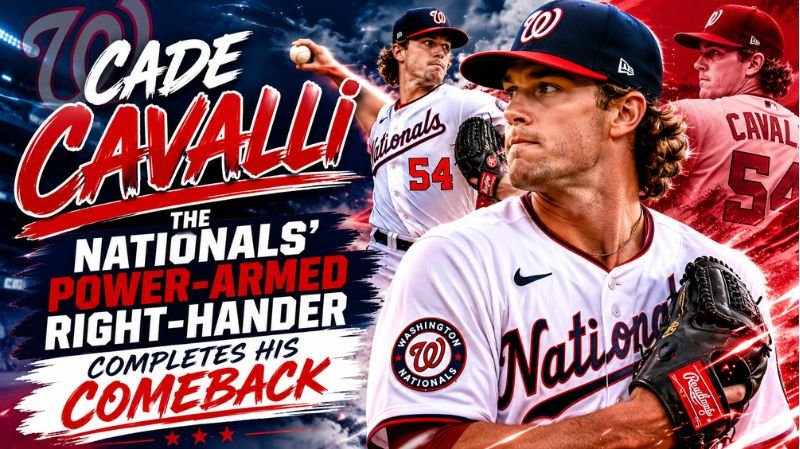
Few young pitchers in recent memory have taken as winding a road back to the mound as Cade Cavalli. A first-round talent with a triple-digit fastball and a knockout slider, Cavalli looked like a future rotation anchor for the Washington Nationals almost from the moment he was drafted. Then injuries intervened, and for nearly three years the question wasn’t whether Cavalli would pitch well in the majors again, but whether he’d pitch in the majors again at all.
By the summer of 2026, that question has been answered emphatically. On June 30, 2026, at Fenway Park, Cade Cavalli turned in the finest start of his career, striking out a career-high 13 Boston Red Sox hitters while allowing just a single hit and one unearned run across seven innings, propelling Washington to an 8-1 victory. It was a signature moment in a comeback that has become one of the more compelling stories of the baseball season — a reminder of why the Nationals were willing to wait.
This piece looks at who Cade Cavalli is, how he got here, the injury that nearly derailed his career, the pitches that make him dangerous, and where his 2026 season stands as he continues to establish himself in Washington’s rotation.
Quick Facts
- Full Name: Cade Cavalli
- Date of Birth: August 14, 1998
- Age: 27
- Birthplace: Tulsa/Bixby, Oklahoma, USA
- Nationality: American
- Height: 6 ft 4 in (1.93 m)
- Weight: Approximately 223 lbs (101 kg)
- Bats/Throws: Right/Right
- MLB Team: Washington Nationals
- Position: Starting Pitcher
- College: University of Oklahoma
- MLB Draft: 2020, 1st Round, 22nd overall (Washington Nationals)
- MLB Debut: August 26, 2022
Early Life and Amateur Career
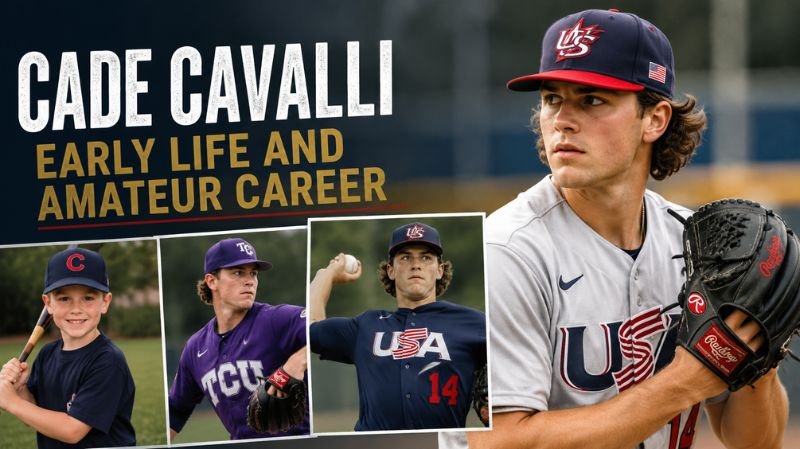
Cade Cavalli grew up in the Tulsa area of Oklahoma, in a family that valued athletics, and gravitated toward baseball early. What set him apart even as a kid wasn’t just arm strength, though he had plenty of that — it was a willingness to grind on the parts of pitching that don’t come naturally to a hard-thrower: mechanics, sequencing, and command. That work ethic became a defining trait, one that coaches at every level pointed to as a reason to bet on his long-term development, and one that would matter enormously years later during his rehab from surgery.
At Bixby High School, Cade Cavalli established himself as one of Oklahoma’s top prep arms, pairing a fastball that already touched the mid-90s with strong strikeout numbers against top competition. He had the physical tools to consider turning pro directly out of high school, but chose instead to develop further in college — a decision that paid off.
Cade Cavalli enrolled at the University of Oklahoma, where he pitched for the Sooners. His stuff took a leap as a college pitcher: better velocity, sharper secondary pitches, and increasing consistency in his delivery, even as occasional command lapses lingered. It was his 2020 season — cut short by the pandemic but dazzling while it lasted — that vaulted him into the conversation as one of the most talented arms in that year’s draft class, thanks to a power fastball, a wipeout slider, and a changeup that was still coming along but showed real promise.
Draft and Minor League Rise
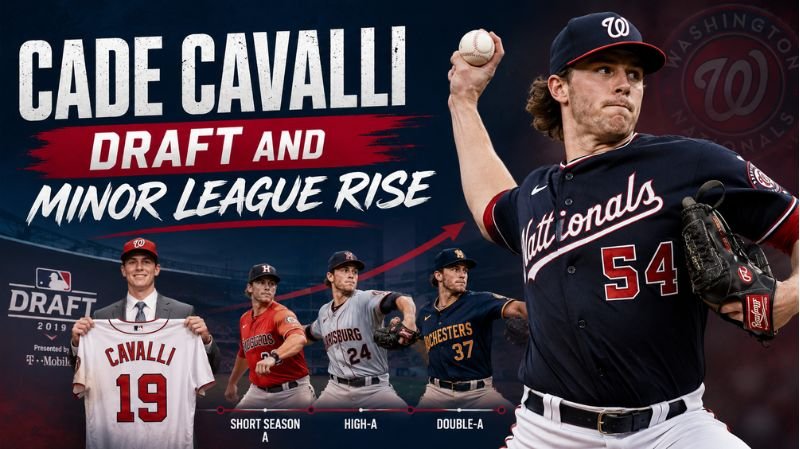
The Washington Nationals selected Cade Cavalli 22nd overall in the 2020 MLB Draft, betting on a pitcher whose ceiling — a hard-throwing, high-strikeout frontline starter — was as high as almost anyone available. He signed shortly after and began climbing through Washington’s farm system.
Cade Cavalli minor league track record backed up the pedigree. He racked up strikeouts at every stop, sat in the upper 90s with his fastball, and flashed a slider that missed bats at a high rate even against advanced competition. Scouts and prospect rankings consistently slotted him among the better pitching prospects in the sport, pointing to his blend of size, stuff, and improving polish as evidence he’d hold up as a starter rather than be pushed to the bullpen.
MLB Debut and the Injury That Changed Everything
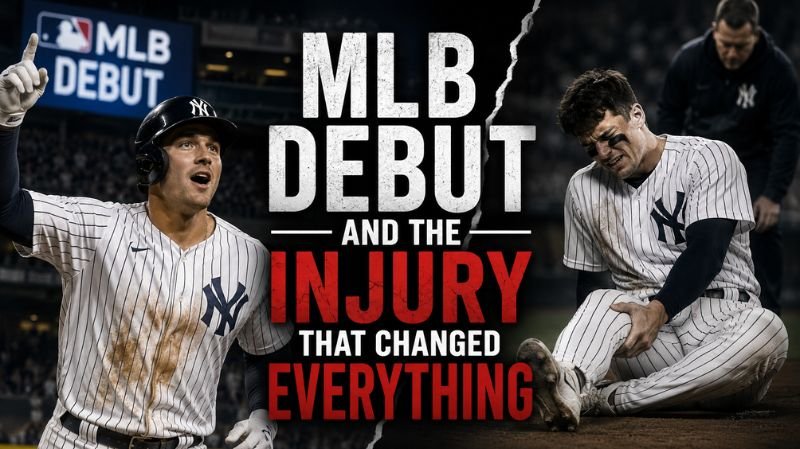
Cade Cavalli made his major league debut on August 26, 2022, a milestone that capped years of development in Washington’s system. But the follow-through on that debut was rocky. Shoulder discomfort limited his early workload, and further evaluation eventually led to a diagnosis that required season-ending — and much more than season-ending — surgery: Tommy John surgery, performed in March 2023.
What followed was one of the more difficult rehab journeys a pitching prospect can go through. Cade Cavalli was initially targeted to return around June 2024, roughly 15 months post-surgery, but setbacks — including a bout of “dead arm” — limited him to just a handful of rehab innings before the Nationals shut him down again. The 2024 season came and went without a big-league appearance. It’s the kind of setback that derails careers, and for a stretch it was fair to wonder whether Cade Cavalli would ever fully regain his prior form, or whether durability concerns would eventually push him to a relief role.
He didn’t relent. Cade Cavalli continued rebuilding arm strength and mechanics through the 2025 season, and in August of that year — nearly three years after his major league debut — he rejoined the Nationals’ rotation. Remarkably, his stuff hadn’t just returned; in some ways it had improved. He was clocking his four-seam fastball at an average of around 97 mph, right in line with or better than his pre-surgery velocity, and was generating swings and misses at a strong clip across his pitch mix.
Pitching Arsenal
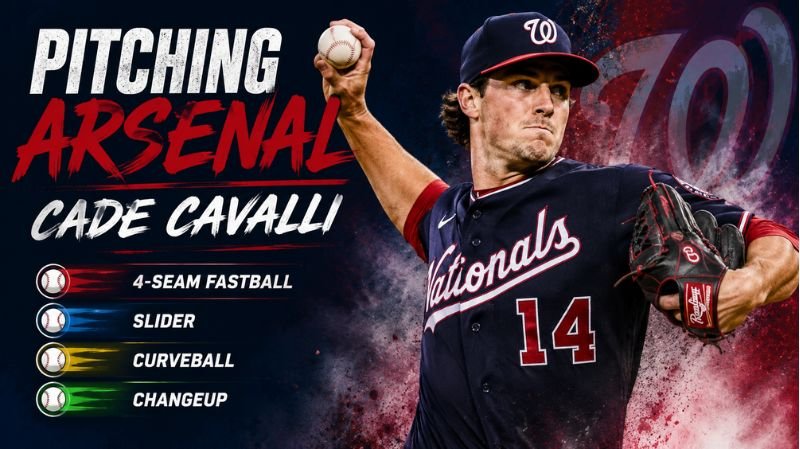
Cade Cavalli repertoire is built around swing-and-miss stuff married to a starter’s four- and five-pitch mix.
Four-Seam Fastball: The foundation of his game, sitting comfortably in the mid-to-upper 90s with enough carry through the zone to beat hitters even when they’re geared up for it.
Slider: Widely regarded as his best secondary offering, with sharp, late break that plays well off the fastball and generates a high rate of whiffs.
Curveball: A distinct, more vertically-breaking shape that gives hitters a different look and disrupts timing, especially useful for stealing early-count strikes.
Changeup: Once considered his fourth pitch and a bit of a work in progress, it has become an increasingly important weapon against left-handed hitters, giving him a more complete five-pitch mix that includes a cutter as well.
The overall package produces well-above-average whiff rates. What’s separated the merely talented version of Cade Cavalli from the frontline-starter version has been command — the ability to consistently land his pitches in and around the zone rather than simply overpowering hitters. Given that command is often the last thing to fully return after elbow reconstruction, that’s been the central storyline of his 2026 season.
The 2026 Season: A Full-Time Return
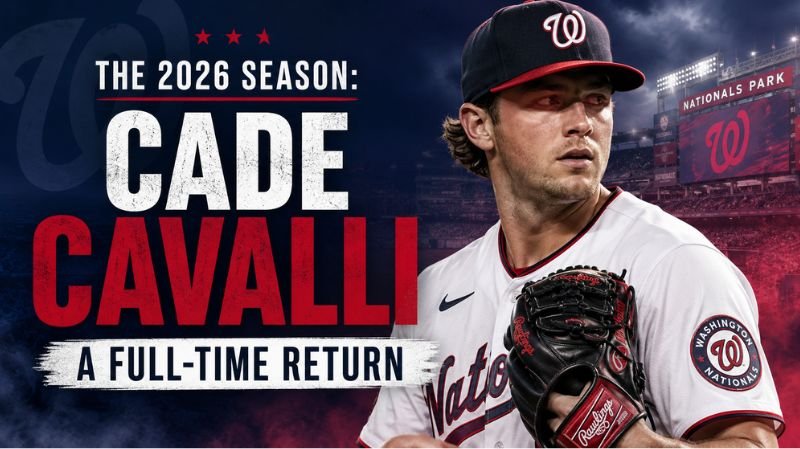
Entering 2026, expectations for Cade Cavalli were tempered by his long injury history but buoyed by what evaluators had seen of his stuff during his 2025 return. The early part of the season bore that mixed picture out. Cade Cavalli battled through uneven results in his first several starts — occasional command issues, some hard contact, and inconsistent length — while still missing bats at a strong rate.
As the season progressed, the on-mound performances began to stabilize. Over a stretch in the middle of the season, Cavalli strung together a run in which he allowed three earned runs or fewer in eight consecutive starts, emerging as arguably Washington’s most reliable starting pitcher over that span. His strikeout-to-walk numbers steadily trended in the right direction as the year wore on, and outings that saw him work into the sixth and seventh innings became increasingly common rather than the exception.
That upward trajectory culminated in his career-defining start against Boston on June 30, in which he retired 19 consecutive batters at one stretch en route to a one-hit, 13-strikeout effort over seven innings. It was the kind of start that validated everything the Nationals had bet on when they drafted him back in 2020 — swing-and-miss stuff, deployed over a full start, without the command lapses or fatigue that had dogged him at various points during his rehab and return.
Strengths as a Pitcher
Several traits explain why evaluators have remained bullish on Cavalli even through a lost developmental window.
Elite Velocity: Few starters combine his kind of fastball velocity with the ability to hold that stuff deep into starts, rather than trading it away for length.
Swing-and-Miss Stuff: Across his full arsenal, Cavalli generates whiffs at a level that places him among the more dangerous strikeout arms in the league on his best nights.
Physical Profile: At 6-foot-4 and a well-built 223 pounds, Cavalli has the classic frame teams look for in a pitcher who can hold up over a 30-plus-start season.
Resilience: Perhaps the most important trait of all has been mental. Grinding through a slow, twice-delayed recovery from Tommy John surgery — including a lost 2024 season — requires a level of patience and self-belief that not every talented prospect has. Cavalli’s willingness to keep rebuilding, start by start, is as much a part of his story as any single pitch in his repertoire.
What’s Next
Cade Cavalli next challenge is turning flashes of brilliance — like the Fenway Park outing — into consistency across a full season and, eventually, a full career. Pitchers returning from Tommy John surgery often see their command fully stabilize only in year two or three back from the injury, which suggests his 2026 season may still be an ascending one rather than his peak. If his velocity holds and his command continues to sharpen the way it has over the course of this season, Cavalli has the tools to become exactly what Washington envisioned when it made him a first-round pick in 2020: a durable, high-strikeout frontline starter anchoring the Nationals’ rotation for years to come.
For a franchise that has weathered a long rebuilding stretch, Cavalli’s comeback is more than an individual redemption story — it’s a building block. And for a pitcher who spent nearly three years wondering if he’d ever get back to a big-league mound, nights like the one in Boston are proof that the long road back was worth it.