Amanda Walker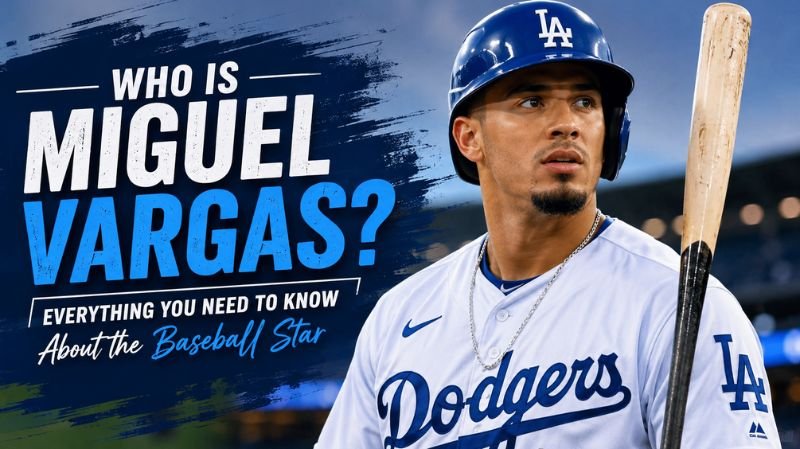
In the summer of 2026, one name has dominated conversations across Major League Baseball clubhouses, fantasy baseball forums, and sports talk radio: Miguel Vargas. For years, Miguel Vargas was known primarily as a highly touted prospect who never quite found his footing during his time with the Los Angeles Dodgers. Then came a trade, a rough transition, and finally, in 2026, a full-blown breakout that culminated in his first career All-Star selection and a home run in the Midsummer Classic itself. His story is one of patience, perseverance, and the kind of late-blooming success that makes baseball fans fall in love with the sport all over again.
This article dives deep into who Miguel Vargas is — his background, his path through the minor leagues, his rocky stint with the Dodgers, his trade to the Chicago White Sox, and the remarkable transformation that has made him one of the most talked-about players in baseball in 2026. Whether you’re a die-hard White Sox fan, a fantasy baseball manager looking for the next breakout star, or simply curious about the man who homered in his first All-Star at-bat, this is everything you need to know about Miguel Vargas.
Early Life and Cuban Roots
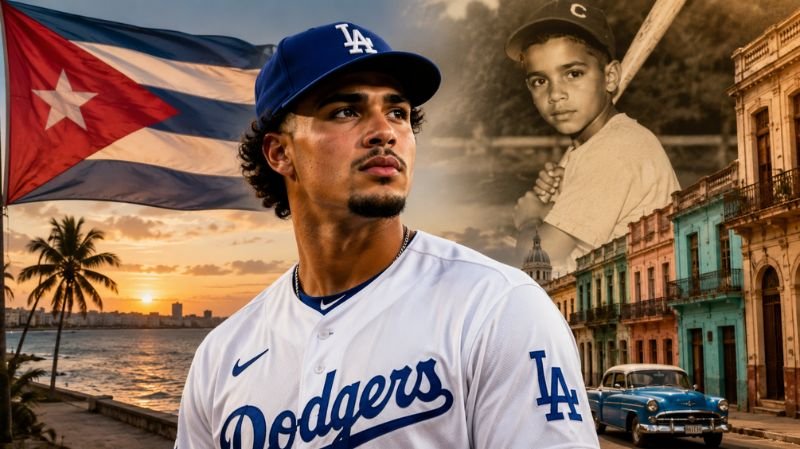
Miguel Antonio Vargas was born on November 17, 1999, in Havana, Cuba. Baseball wasn’t just a pastime in his household — it was a family legacy. His father, Lázaro Miguel Vargas, was a celebrated third baseman for the Cuban national team and one of the most respected figures in Cuban baseball history. Growing up in that environment, Miguel was immersed in the game from an early age, learning the fundamentals of hitting, fielding, and competing at the highest level from a man who had done it all on the international stage.
As a young player, Miguel Vargas played for Industriales de La Habana, one of the most storied clubs in the Cuban National Series. Cuban baseball has long been recognized as one of the most talent-rich and fundamentally sound baseball cultures in the world, producing stars like José Abreu, Yoenis Céspedes, and Luis Robert Jr. Miguel Vargas grew up idolizing the game in that tradition, developing a smooth left-handed swing and advanced feel for hitting that scouts would later rave about.
However, life in Cuba came with limitations for a young player with major league aspirations. Cuban players wishing to sign with MLB teams have historically needed to defect from the island, a path fraught with difficulty and personal sacrifice. At just 14 years old, Miguel Vargas left Cuba, embarking on a journey that eventually took him through the Bahamas as he worked to establish residency and eligibility to sign with an MLB club. It was a bold and difficult decision for a young teenager, one that speaks to the sacrifices many Cuban players and their families make in pursuit of a baseball career in the United States.
Signing With the Dodgers
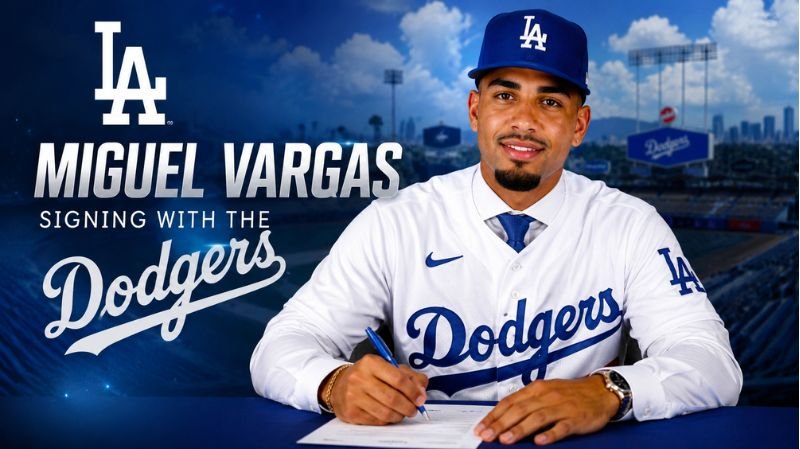
In September 2017, at 17 years old, Miguel Vargas signed with the Los Angeles Dodgers as an international free agent. The Dodgers, known for their aggressive and successful player development pipeline, saw in Vargas a hitter with advanced bat-to-ball skills, a patient approach, and enough athleticism to handle multiple infield positions. He entered a Dodgers farm system that, at the time, was widely regarded as one of the deepest and most talented in all of baseball.
Miguel Vargas began his professional career in the Dodgers’ rookie-level programs before working his way up through the system. In his first taste of full-season ball, playing across Single-A Great Lakes and Advanced-A Rancho Cucamonga in 2019, he showed off the sweet left-handed swing that had made him a well-regarded international signing. The 2020 minor league season was canceled entirely due to the COVID-19 pandemic, robbing Miguel Vargas of a critical developmental year, as it did for hundreds of other prospects across the sport.
When play resumed in 2021, Miguel Vargas made up for lost time in dramatic fashion. Splitting the season between Double-A Tulsa and High-A Great Lakes, he hit an impressive .319 with 23 home runs and 76 RBI across 120 games. The performance was so strong that the Dodgers organization honored him with the Branch Rickey Minor League Player of the Year Award, a recognition reserved for the top performer across the entire farm system. He was also named a Double-A Central Postseason All-Star, cementing his status as one of the game’s rising infield prospects.
Rise Through Triple-A and MLB Debut
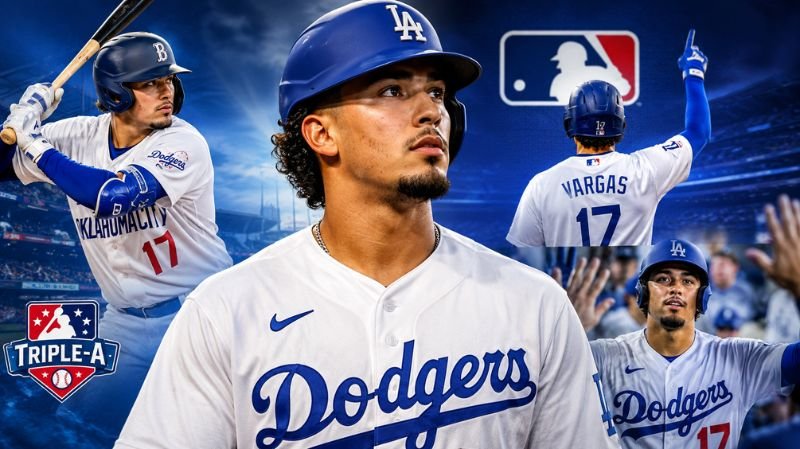
Miguel Vargas carried his momentum into 2022, opening the season at Triple-A Oklahoma City. He was even invited to participate in the prestigious All-Star Futures Game, a showcase reserved for the sport’s top prospects. In 113 games with Oklahoma City that year, Vargas hit .304 with 17 home runs and 82 RBI, numbers that made it clear he was ready for his shot in the majors.
That call finally came on August 2, 2022, when the Dodgers promoted Miguel Vargas to the big leagues for the first time. He made his MLB debut the following day in San Francisco, recording his first career hit — a double off Alex Cobb. It was a memorable moment for a player who had come so far from his childhood in Havana. Later that season, he collected his first career home run on September 24 against the St. Louis Cardinals, and he even earned a spot on the Dodgers’ 2022 NLDS roster, though he did not appear in the postseason series.
His rookie stint wasn’t statistically overwhelming — he hit just .170 across 18 games — but the promotion validated years of development and represented the culmination of the difficult journey he had taken from Cuba to the Bahamas to the Dodgers’ vaunted player development system.
Struggles With the Dodgers
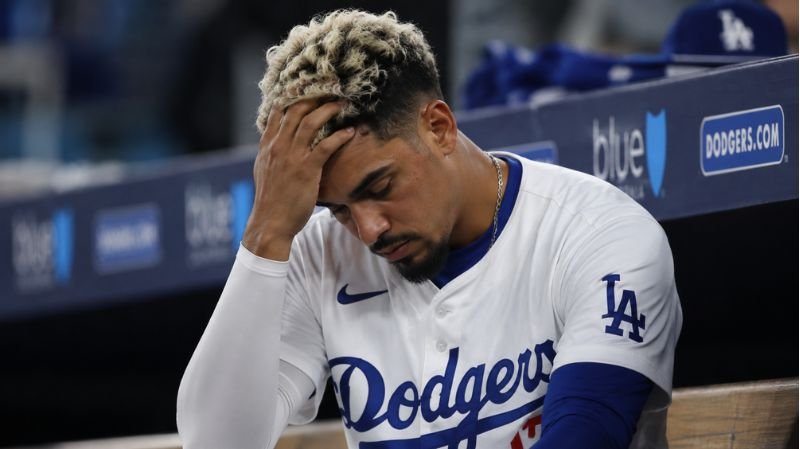
Despite his prospect pedigree, Miguel Vargas never quite settled into a consistent role in Los Angeles. The Dodgers, as one of the wealthiest and most talent-rich organizations in baseball, had a crowded infield picture throughout Miguel Vargas time in the organization. Established veterans and other young talents frequently blocked his path to consistent playing time, and Vargas found himself shuttling between the majors and Triple-A on multiple occasions.
In 2023, Miguel Vargas entered spring training with buzz as a potential everyday second baseman and was even named the Dodgers’ Opening Day second baseman. But by mid-July, he had been optioned back to the minors, where he would spend a significant chunk of the remainder of the season. Across parts of three seasons with the Dodgers, Miguel Vargas battled inconsistency at the plate and in the field, playing time at third base, first base, second base, and even some left field, but never fully capitalizing on the opportunities he was given.
By the numbers, his overall body of work with the Dodgers reflected those struggles — an average in the .200 range, with modest home run and RBI totals, and a batting profile that hadn’t yet caught up to the promise he’d shown as a prospect. The always-competitive Dodgers, with championship aspirations and a crowded roster, needed more consistent production, and by the summer of 2024, the organization made the difficult decision to move on from the once-prized prospect.
The Trade to the Chicago White Sox
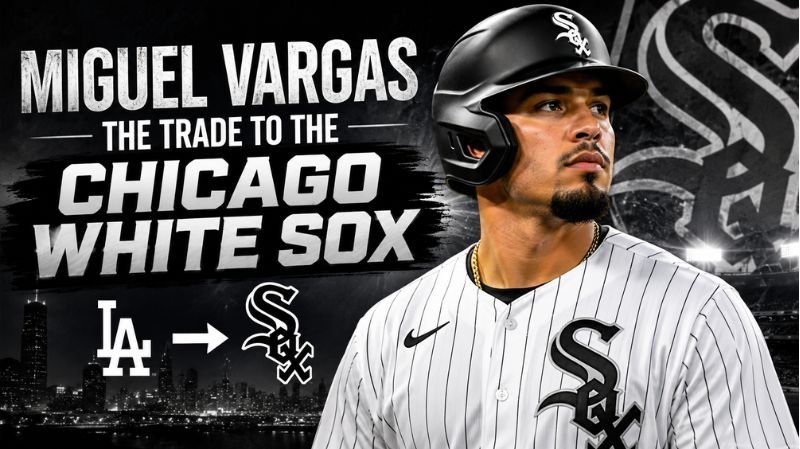
On July 29, 2024, the Dodgers traded Miguel Vargas to the Chicago White Sox as part of a three-team, eight-player deal that also involved the St. Louis Cardinals. In the deal, the Dodgers received veteran infielder Tommy Edman from the Cardinals and reliever Michael Kopech from the White Sox, while the Cardinals landed pitchers Erick Fedde and Tommy Pham. For Chicago, the return included Vargas along with infielders Alexander Albertus and Jeral Pérez.
At the time, the trade looked like a clear step backward for Miguel Vargas on paper. He was going from a star-studded, championship-contending Dodgers roster to a White Sox team in the middle of a historically bad rebuild — Chicago would go on to lose 121 games during the 2024 season, one of the worst single-season records in modern MLB history. The early transition was brutal. Vargas slashed a dismal .104/.217/.170 with a paltry 17 wRC+ over his first 42 games in a White Sox uniform, numbers that suggested his career might be in serious jeopardy. Across the 2024 season combined between the Dodgers and White Sox, he hit just .150 with five home runs and 16 RBI over 72 games — by far the worst stretch of his professional career.
For a player whose calling card had always been his advanced hit tool and feel for the barrel, the freefall was alarming. Many analysts wondered whether Miguel Vargas would ever develop into a productive everyday major leaguer, or whether he’d become one of the many well-regarded prospects who simply never lived up to their billing.
Finding His Footing in 2025
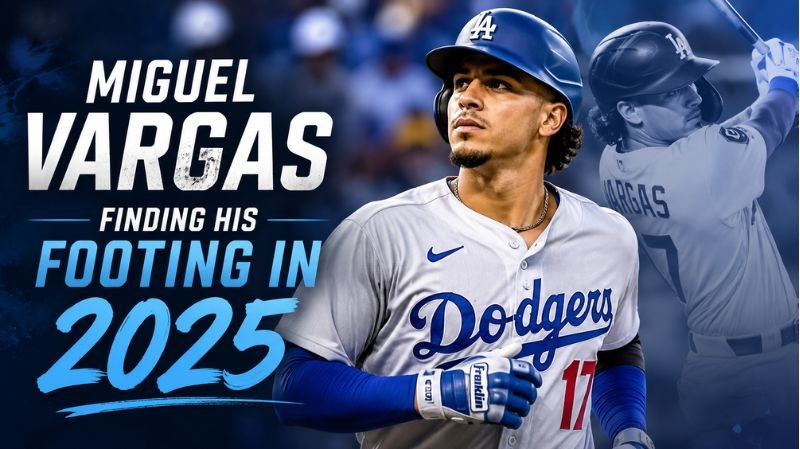
Rather than folding under the pressure, Miguel Vargas used the difficult transition as motivation. The White Sox, with little to lose given their rebuilding timeline, committed to giving him an extended look at third base, and Vargas began reworking his swing mechanics and approach at the plate. The results started to show in 2025. He posted a .244 batting average with 8 home runs and 26 RBI through the first several months of that season, numbers that, while modest, represented a significant step forward from his disastrous finish to 2024.
A signature moment came in mid-May 2025, when Miguel Vargas was named American League Player of the Week after a scorching stretch in which he went 10-for-24 (.417) with four home runs and nine RBI in a series against the Cincinnati Reds and Chicago Cubs. It was his first career Player of the Week honor and marked the first such recognition for a White Sox infielder since José Abreu earned the honor back in 2021. Over his final 116 games of the 2025 season, Miguel Vargas hit 16 home runs with a .769 OPS, a clear signal that the adjustments were working and that better days were ahead.
The 2026 Breakout Season
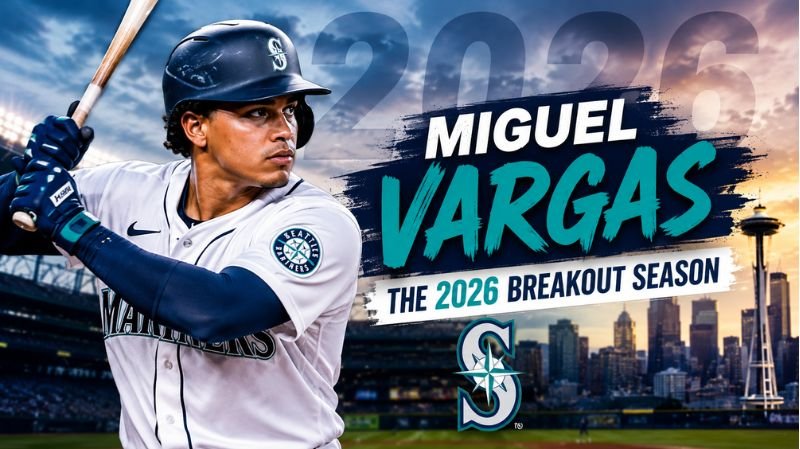
If 2025 was the turnaround, 2026 has been the full arrival. Entering the season, expectations for both Miguel Vargas and the White Sox as a team were modest at best — Chicago had endured three consecutive brutal seasons, and few expected the club to be competitive, let alone a genuine playoff contender. Instead, the White Sox surged into playoff contention in the American League Central, and Miguel Vargas has been at the heart of that turnaround.
By the middle of June 2026, Miguel Vargas was putting up video-game numbers for a third baseman. Among all primary third basemen in the league, he led outright in home runs, RBI, runs scored, and walks, while ranking near the top of the league in OPS and wins above replacement. His underlying quality-of-contact metrics were even more staggering — among all qualified hitters in baseball, only a small handful, including established stars like Yordan Alvarez and Bobby Witt Jr., were producing more hard-hit balls in the ideal launch-angle range than Miguel Vargas. His exit velocity gains from the prior season were also among the largest in all of baseball, evidence of a legitimate mechanical and approach overhaul rather than a lucky hot streak.
The advanced numbers matched the traditional ones. By early July, Miguel Vargas was slashing something in the range of .245 to .248 with around 20 home runs, roughly 55 to 59 RBI, double-digit stolen bases, and an OPS pushing toward .850 — remarkable across-the-board production for a player who had posted a sub-.200 batting average with the White Sox just two seasons earlier. He also became part of White Sox history when he, Colson Montgomery, and Munetaka Murakami each reached 20 home runs before the All-Star break, marking only the second time in franchise history that three teammates had accomplished that feat before the Midsummer Classic, joining the trio of Jim Thome, Jermaine Dye, and Paul Konerko from 2006.
First All-Star Selection and a Historic Home Run

The crowning achievement of Miguel Vargas remarkable season came when he was named to the American League All-Star roster for the first time in his career — the lone White Sox representative at the 2026 Midsummer Classic in Philadelphia. The selection carried extra significance for the franchise: Miguel Vargas became just the sixth primary third baseman in White Sox history to earn an All-Star nod, joining a list that includes Joe Crede, Robin Ventura, Bill Melton, George Kell, and Jimmy Dykes. Remarkably, no White Sox third baseman had started an All-Star Game since Dykes did so in the very first Midsummer Classic back in 1933 — a drought that had stood for nearly a century.
Miguel Vargas made the most of his moment on the sport’s biggest midseason stage. Entering the game as a pinch-runner before taking over at third base, he stepped to the plate with the American League already comfortably ahead and crushed a two-run — err, solo — shot into the second deck in left field, a blast measured at 433 feet. The home run made Miguel Vargas just the third player in White Sox franchise history to homer in an All-Star Game, joining franchise legends Frank Thomas, who accomplished the feat in 1995, and Magglio Ordóñez, who did so in 2001. He finished the night 1-for-2 in the American League’s 4-0 victory.
For a player who, just two years earlier, had been hitting near .100 and facing real questions about his major league future, the moment was the culmination of an extraordinary turnaround — proof that patience, hard work, and a willingness to adapt can transform a career.
Playing Style and Strengths
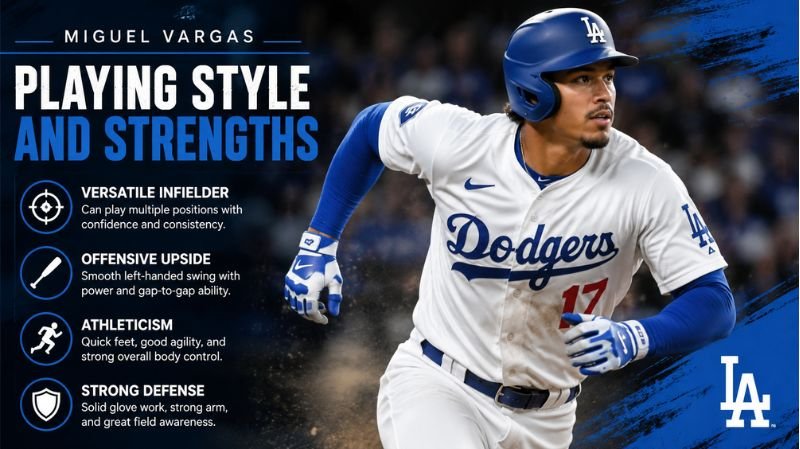
Scouts have long praised Vargas for his advanced hit tool, and that trait has been on full display during his breakout stretch. He combines a disciplined approach at the plate — evidenced by his career-low chase rates and rising walk totals — with increasingly impactful power, a combination that has made him one of the most dangerous hitters in the American League Central. His strikeout rate has steadily declined over the past several seasons, dropping from the mid-20s percentage range in 2024 to the high teens by 2026, while his walk rate has climbed into elite territory.
Defensively, Vargas has settled in primarily at third base, though he has experience at first base, second base, and left field, giving him added versatility. His athleticism also shows up on the basepaths — despite not being regarded as a burner, he possesses well above-average sprint speed, which has translated into a career-high stolen base total in 2026. While his defensive metrics have generally graded as below average throughout his career, his continued development at the hot corner has been steady, and his offensive production has more than compensated for whatever he gives back with the glove.
Family and Personal Life

Vargas’s connection to his father Lázaro remains a defining part of his story and public persona. The elder Vargas’s decorated career with the Cuban national team set an extraordinarily high bar, and Miguel has spoken about how both his father’s example and his mother’s support shaped his determination throughout the difficult stretches of his career. His path from Havana to the Bahamas to the Dodgers’ academy system to the major leagues is a testament to the sacrifices that many Cuban-born players and their families make in pursuit of an MLB career.
Off the field, Vargas has built strong relationships with teammates from his days coming up through the Dodgers system, including a close friendship with current Dodgers outfielder Andy Pages. The two forged their bond while developing together in the Dodgers’ minor league academies, and both were pleased to see the other reach the milestone of their first All-Star selection in the same season, even while playing for different organizations on opposite sides of the country.
What’s Next for Miguel Vargas
As the White Sox continue their surprising playoff push in the second half of the 2026 season, Vargas figures to remain one of the central figures in the team’s success. His transformation from a struggling, seemingly lost prospect to an All-Star-caliber cornerstone piece has become one of the most compelling storylines in baseball this year. For a franchise that endured three of the worst seasons in modern MLB history immediately before his arrival, Vargas has emerged as a symbol of the rebuild’s payoff and a legitimate building block for the future.
For fans of the sport, Vargas’s story serves as a reminder that player development is rarely linear. Prospects who stumble out of the gate, or who get traded away from glamorous, championship-caliber franchises, don’t always fade into obscurity. Sometimes, given patience, opportunity, and the right adjustments, they blossom into exactly the kind of player scouts always believed they could become.
Conclusion
Miguel Vargas’s journey — from a childhood shaped by his father’s Cuban baseball legacy, to a difficult defection as a young teenager, through the ups and downs of the Dodgers’ crowded farm system, to a rocky introduction to Chicago, and finally to a breakout All-Star campaign with a historic home run on the sport’s biggest midseason stage — is one of the most compelling stories in baseball in 2026. Once viewed as a former top prospect who may never live up to his potential, Vargas has re-written his own narrative through hard work, mechanical adjustments, and sheer perseverance. As the 2026 season continues, all eyes will be on Miguel Vargas to see just how far this remarkable turnaround can take him — and the White Sox — before the year is through.