Christine Carter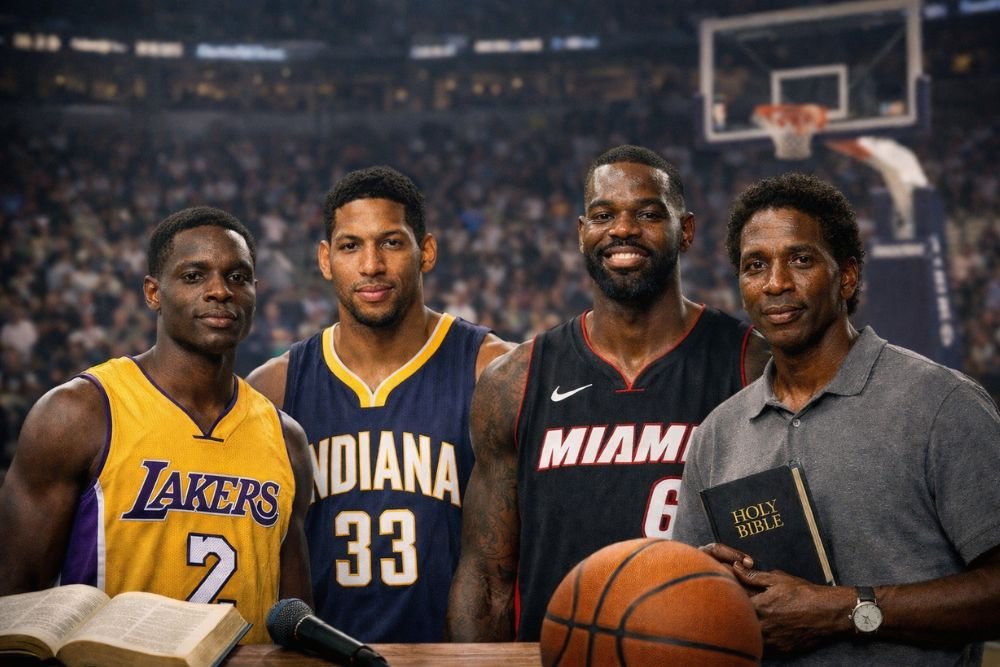
The NBA is a league of extraordinary talent, billion-dollar contracts, and global celebrity. But behind the highlight reels and championship rings, some players have made choices that had nothing to do with points or assists.
A handful of NBA players have identified as Jehovah’s Witnesses — a faith that carries values that can sit in direct tension with the world of professional sports. One retired early, walking away from tens of millions of dollars. Another almost never made it to the NBA at all. A third found that his faith gave him a rare sense of calm in one of the most pressure-filled arenas in the world.
This article tells those stories in full — including facts that most roundups leave out.
Quick Answer: How Many Ex-NBA Players Are Jehovah’s Witnesses?
There is no official database tracking NBA players by religion. However, based on verified public reporting and player statements, at least five to seven former NBA players have had a confirmed connection to the Jehovah’s Witness faith.
The most prominent names include:
- Darren Collison — retired at 31 to focus on ministry
- Danny Granger — grew up in a Jehovah’s Witness household; baptized in 2017
- Dewayne Dedmon — raised in the faith; his mother initially forbade him from playing basketball
- A.C. Green — aligned with the faith around the time of his 1987 championship
- Sam Perkins — drew attention for stepping out of the national anthem line as a Jehovah’s Witness
- Detlef Schrempf — FIBA Hall of Famer with connections to the faith
- Dave Meyers — retired after five NBA seasons in 1980 to focus on family and the Jehovah’s Witness faith
Jehovah’s Witnesses make up roughly 0.8% of the U.S. population — making this a remarkably small group inside an already elite league.
1. Darren Collison — The Man Who Walked Away From $10 Million Per Year
Darren Collison is the most discussed example of an NBA player and Jehovah’s Witness — and for good reason.
Career: 10 seasons (2009–2019) with the New Orleans Hornets, Indiana Pacers, Dallas Mavericks, LA Clippers, Sacramento Kings, and LA Lakers
Stats in final season: 11.2 points, 6.0 assists, 3.1 rebounds, 1.4 steals per game
Earnings: Approximately $43 million over his NBA career
The Retirement That Stunned the NBA
On June 28, 2019, at age 31, Collison announced his retirement through a letter to ESPN’s The Undefeated. He was widely expected to sign a new contract worth $10–12 million per season. Instead, he walked away entirely.
“While I still love basketball, I know there is something more important, which is my family and my faith. I am one of Jehovah’s Witnesses and my faith means everything to me. I receive so much joy from volunteering to help others and participate in a worldwide ministry. The joy I feel is unmatched.”
— Darren Collison, ESPN’s The Undefeated, June 2019
The Comeback — and What It Reveals
What most articles don’t mention is what happened next. In 2021, Collison briefly returned to basketball, signing a 10-day contract with the Los Angeles Lakers. He also worked out with the Phoenix Suns and the Golden State Warriors, and later joined the South Bay Lakers, the Lakers’ G-League affiliate.
The comeback attempt never turned into a permanent return — but it adds an important layer to his story. It shows the pull that elite-level competition can still have, even on someone who made a deliberate, faith-driven decision to step away. His story isn’t a clean break; it’s a genuine human tension between two callings.
2. Danny Granger — The All-Star Who Found Serenity in Faith
Career: Indiana Pacers, Miami Heat, LA Clippers, Philadelphia 76ers (2005–2015)
Notable achievement: NBA All-Star 2009; Most Improved Player award
Granger grew up in a Jehovah’s Witness household and has credited his faith with giving him a psychological edge that few athletes talk about openly.
“I have a great sense of serenity as a Jehovah’s Witness, and that peace carries over to the basketball court. When I’m out there, I’m not thinking about all the pressure and the noise. I’m just playing the game I love.”
— Danny Granger, Indianapolis Star, 2008
Granger’s faith wasn’t just a background detail — it was the lens through which he understood competition and pressure. He was also notable off the court, participating in philanthropic work in Haiti and advocating for mental health awareness, causes he has linked to his values as a person of faith.
In 2017, two years after retiring from the NBA, Granger was baptized as a Jehovah’s Witness — a formal step that signals deeper commitment to the faith than simply being raised in it.
3. Dewayne Dedmon — The Player Who Almost Never Played
Career: Golden State Warriors, Philadelphia 76ers, Orlando Magic, San Antonio Spurs, Atlanta Hawks, Sacramento Kings, Miami Heat
Entry point: Undrafted; signed by Golden State Warriors in 2013
Dedmon’s story is arguably the most dramatic of any Jehovah’s Witness in NBA history — not because of what happened during his career, but because of what almost prevented it from starting.
Raised by a mother who was a devout Jehovah’s Witness, Dedmon was not allowed to play organized basketball as a child. The sport was seen as incompatible with the lifestyle and time commitments the faith required. As a result, he didn’t begin playing competitively until his senior year of high school — an almost impossibly late start for anyone hoping to reach the NBA.
Despite that late beginning, his play in his senior year was impressive enough to earn him a spot on the USC Trojans. He went undrafted but refused to quit, eventually earning a spot on the Golden State Warriors roster in 2013.
“I can honestly say that my faith has helped me overcome a lot of hardship in my life. It has helped me maintain my composure and my attitude amid trying circumstances.”
— Dewayne Dedmon, Business Insider
Dedmon’s journey is a remarkable example of determination overcoming both systemic disadvantage and personal restriction.
4. The Lesser-Known Names: A Historical Perspective
A.C. Green
Green, who played from 1985 to 2001 and won three NBA championships with the LA Lakers and one with the Dallas Mavericks, aligned with the Jehovah’s Witness faith around 1987. He became known for his outspoken faith and has been a regular speaker at religious gatherings and youth events since retiring.
Sam Perkins
The Seattle SuperSonics center drew national attention in the 1990s when he stepped out of the line-up during the national anthem — citing his Jehovah’s Witness beliefs, which call for political neutrality. It was one of the most visible moments of faith-based anthem protest in NBA history, predating more recent controversies in professional sports.
Dave Meyers
A two-time NCAA champion with UCLA who was drafted by the Lakers in 1975, Meyers played five seasons in the NBA before making a quiet but significant announcement in 1980: he would retire to spend more time with his family and deepen his commitment to the Jehovah’s Witness faith. His story closely mirrors Collison’s, nearly four decades earlier.
Detlef Schrempf
The German-born forward and FIBA Hall of Famer also had connections to the Jehovah’s Witness faith during his NBA career, though he was less publicly vocal about it than Collison or Perkins.
Why Are Jehovah’s Witnesses So Rare in the NBA?
This is actually the most interesting question the topic raises — and the answer is more specific than most articles acknowledge.
The Lifestyle Gap Is Real
Jehovah’s Witnesses emphasize modesty, community service, and a lifestyle that actively avoids fame and material excess. The NBA — with its celebrity culture, endorsement deals, and spotlight — sits at almost the opposite end of that spectrum. Players who hold these values closely often feel a genuine pull away from the league, as Collison’s retirement demonstrates.
Time Commitment Creates Structural Conflict
Active Jehovah’s Witnesses are expected to attend meetings, engage in door-to-door ministry, and participate in community service regularly. NBA schedules — 82+ regular season games, travel, practice, media obligations — leave almost no room for that kind of commitment. The two lifestyles are structurally difficult to combine at a high level.
Political Neutrality and the National Anthem
Jehovah’s Witnesses are expected to remain neutral in political matters and not participate in symbols of national allegiance — including standing for national anthems. Sam Perkins made this visible in the 1990s. In a league where anthem participation is often publicly scrutinized, this belief puts players in an uncomfortable spotlight that many would rather avoid.
Late Starts and Missed Development
As Dedmon’s story shows, children raised in strictly observant Jehovah’s Witness households may be actively discouraged from participating in organized sports. Given how critical early athletic development is to reaching the NBA, this creates a structural barrier that filters out many potential players before they ever get a real chance.
Faith vs. Fame: What These Stories Actually Mean
The number of Jehovah’s Witnesses in NBA history is small. But the choices they made are disproportionately significant.
Darren Collison left $10–12 million per year on the table at the peak of his career. Dave Meyers did something similar four decades earlier. Dewayne Dedmon built an entire NBA career from a foundation that nearly prevented him from playing at all. Sam Perkins took a public stand on the national anthem in an era when that kind of protest was almost unheard of. Danny Granger said his faith gave him something money and recognition couldn’t — genuine calm.
These aren’t just sports stories. They are stories about what people value most when everything is on the table.
In a league where most decisions are made in pursuit of more — more money, more wins, more fame — the players on this list chose something else. Whether you share their beliefs or not, that is a genuinely rare and interesting thing.
Frequently Asked Questions
Did Darren Collison ever return to the NBA after retiring for his faith?
Yes. In 2021, Collison signed a 10-day contract with the Los Angeles Lakers. He also worked out with the Phoenix Suns and Golden State Warriors, and spent time with the South Bay Lakers (G-League). He never secured a permanent roster spot, but the attempt is an important part of his full story.
Is Danny Granger still a Jehovah’s Witness?
Granger was raised in a Jehovah’s Witness household and was formally baptized in 2017, two years after his retirement. He has spoken publicly about the role his faith played in his NBA career.
Why did Dewayne Dedmon start playing basketball so late?
Dedmon’s mother, a devout Jehovah’s Witness, did not allow him to participate in organized sports during childhood. He only began playing competitively in his senior year of high school, which is an extremely late start for any aspiring professional athlete.
Are there any current NBA players who are Jehovah’s Witnesses?
No current NBA players have publicly identified as Jehovah’s Witnesses. Given the faith’s emphasis on privacy and modest living, it is possible that some players practice it privately without disclosure.
What percentage of Americans are Jehovah’s Witnesses?
According to the Pew Research Center, approximately 0.8% of the U.S. population identifies as Jehovah’s Witnesses — making it one of the smaller religious denominations in the country, and helping explain why the group is so rarely represented in the NBA.
Final Thoughts
The intersection of NBA basketball and the Jehovah’s Witness faith is a narrow one — but it has produced some of the most quietly compelling stories in American sports.
These are not just stories about religion. They are stories about identity, sacrifice, and what happens when the values a person holds most deeply collide with the pressures of an industry built on spectacle and money.
If you know of another NBA player with a connection to the Jehovah’s Witness faith, or have additional details about the players mentioned here, share them in the comments below.

 Amanda Walker