Amanda Walker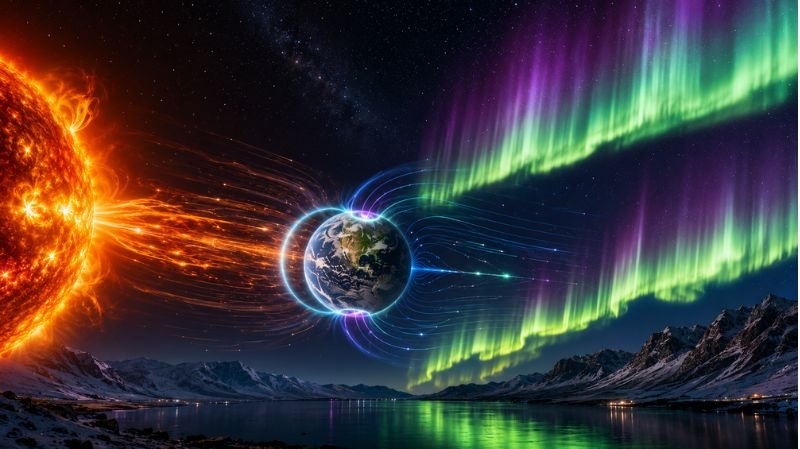
Picture this: you are standing in a field in Northern Lights Norway at midnight, the air sharp enough to sting your cheeks, your breath rising in clouds. Then, without warning, a ribbon of emerald green appears above you, curling and folding across the sky like smoke in slow motion. It deepens. Pulses. A curtain of violet appears at its edge. Then crimson flares near the horizon. For the next twenty minutes, the entire sky above you is alive.
This is the Aurora Borealis — the Northern Lights. Few natural phenomena inspire this depth of awe. But what most people who witness it don’t realize is that this extraordinary display is not magic; it is the visible consequence of an invisible storm — a collision between solar energy, planetary magnetism, and the gases that make up our atmosphere. Understanding the science does not diminish the wonder. If anything, it makes the Northern Lights more astonishing.
1. It All Begins 93 Million Miles Away
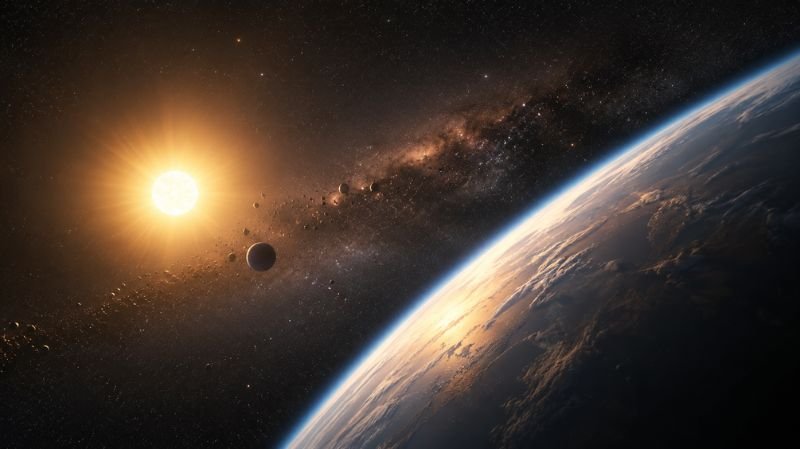
The story of the Northern Lights starts on the Sun. At its core, nuclear fusion converts hydrogen into helium, releasing energy on a scale almost impossible to comprehend. That energy drives an unstable, churning outer layer of plasma that continuously sheds charged particles — primarily electrons and protons — into space in a constant stream called the solar wind.
Under normal conditions, the solar wind travels at roughly 300 to 800 kilometres per second. But the Sun is not a quiet, steady source. It experiences cycles of activity and periods of intense eruption. The three main events that matter for aurora-watchers are:
- Solar flares — sudden, intense bursts of radiation from the Sun’s surface
- Coronal Mass Ejections (CMEs) — massive clouds of magnetised plasma hurled into space
- High-speed solar wind streams — flows of fast-moving particles from openings in the solar corona
When any of these reach Earth — typically one to three days after leaving the Sun — the result is a geomagnetic storm, and those storms are what produce the most spectacular auroral displays.
Key Fact: The Sun follows an approximately 11-year activity cycle. We are currently in Solar Cycle 25, which reached its predicted peak around 2024–2025 — meaning we are in one of the best periods in over a decade to witness strong auroras.
2. Earth’s Invisible Shield
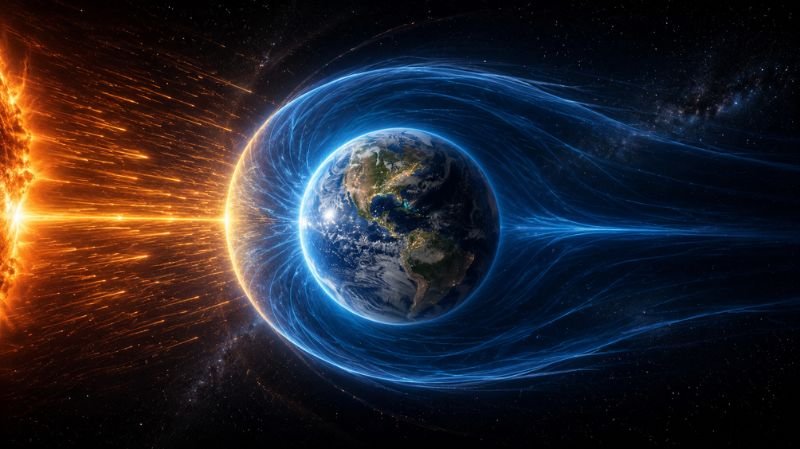
Earth is surrounded by a magnetic field generated by the movement of molten iron in its outer core. This field extends tens of thousands of kilometres into space, forming a protective bubble called the magnetosphere. Without it, the solar wind would strip away our atmosphere over geological timescales, much as it did on Mars.
When the solar wind encounters the magnetosphere, most particles are deflected and flow around the planet. But Earth’s magnetic field is not a perfect, impenetrable wall. During a geomagnetic storm, the interaction between the solar wind’s embedded magnetic field and Earth’s own field can temporarily weaken the shield, allowing particles to pour in.
These particles do not land randomly. They are funnelled along magnetic field lines toward the polar regions. This is why auroras occur in roughly oval-shaped zones, called auroral ovals, encircling both magnetic poles. The result is a natural light show almost exclusively staged in the Arctic and Antarctic — unless the storm is powerful enough to push the oval equatorward, bringing auroras to lower latitudes.
The Kp Index: How Aurora Forecasting Works
Scientists measure geomagnetic disturbance using the Kp index, a scale from 0 to 9. A Kp of 0–2 represents quiet conditions; auroras stay near the poles and remain faint. A Kp of 5 is considered a minor storm and may bring visible auroras to Scotland, southern Canada, or the Northern Lights United States. A Kp of 7 or higher pushes the auroral oval far enough south that people in central Europe or the mid-latitudes of North America can see them. During exceptionally strong storms (Kp 9), auroras have been reported in Spain, Texas, and even parts of northern India.
Apps like SpaceWeatherLive, My Aurora Forecast, and NOAA’s Space Weather Prediction Centre all track the Kp index in near-real-time, making it possible to plan sightings with reasonable accuracy 24 to 48 hours in advance.
3. How the Lights Are Actually Made
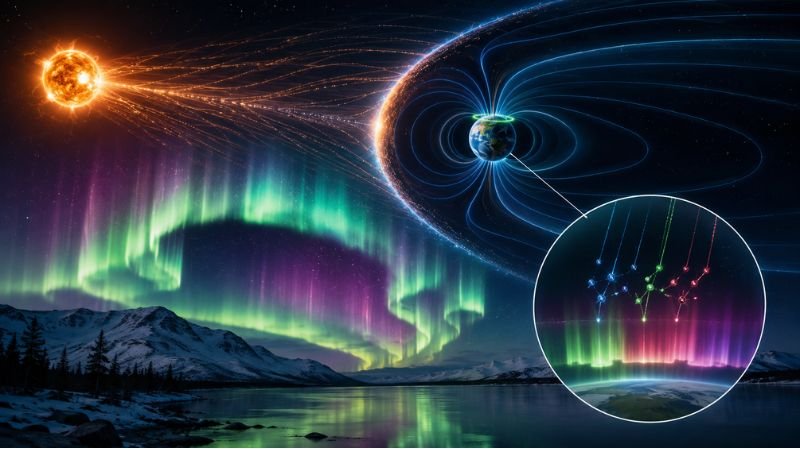
The most common explanation — that solar particles “collide with atmospheric gases” and produce light — is accurate but incomplete. The full picture is considerably more elegant.
When charged particles enter the upper atmosphere, they travel along magnetic field lines and encounter oxygen and nitrogen atoms. The particles transfer energy to these atoms, kicking electrons up to higher energy states — a condition physicists call “excitation.” Excited atoms are unstable; they almost immediately shed that excess energy by emitting a photon of light as the electron drops back to its ground state. Multiply this process across billions of atmospheric molecules across hundreds of kilometres of sky, and you get an aurora.
The colours Northern Lights produced depend on which gas is involved and at what altitude the collision occurs:
- Green (100–250 km altitude): The most common colour, produced by excited oxygen atoms releasing photons at a wavelength of 557.7 nanometres. This is the colour human eyes are most sensitive to in low light, which is why it dominates visual sightings.
- Red (above 250 km): Also oxygen, but at higher altitudes where the atmosphere is thinner. At these heights, atoms remain excited longer before colliding with another particle, producing a lower-energy photon in the red range. Red auroras are rarer but can be spectacular — and are often more vivid in photographs than to the naked eye.
- Blue and purple (below 100 km): Produced primarily by nitrogen molecules. These colours appear at the lower fringes of auroral curtains.
- Pink: A blend of red and blue-green, often produced during intense activity when multiple emissions overlap at lower altitudes.
Camera vs. Naked Eye: Cameras are far more sensitive to red and green wavelengths than the human eye in dark conditions. This is why aurora photographs often look more vivid and colourful than what observers actually see. If you see green, the camera will likely capture both green and red — producing those iconic multi-layered images.
Why the Northern Lights Move
The dynamic, dancing quality of auroras — the rippling, swirling, rapid brightening — is caused by changes in the flow of Birkeland currents: vast sheets of electrical current that flow along magnetic field lines between the magnetosphere and the ionosphere. When the solar wind interacts with Earth’s field, these currents intensify and shift. The result, seen from the ground, is the aurora’s characteristic restless motion.
Particularly dramatic brightening events, called substorms, occur when energy stored in Earth’s magnetotail — Northern Lights the stretched, comet-like tail of the magnetosphere on the night side of Earth — suddenly releases. The magnetic field lines snap back, releasing a burst of energy that drives a surge of particles into the atmosphere, causing the aurora to explosively brighten and expand across the sky. These substorms can last minutes to hours and represent the most visually striking aurora events.
4. Where and When to See Them
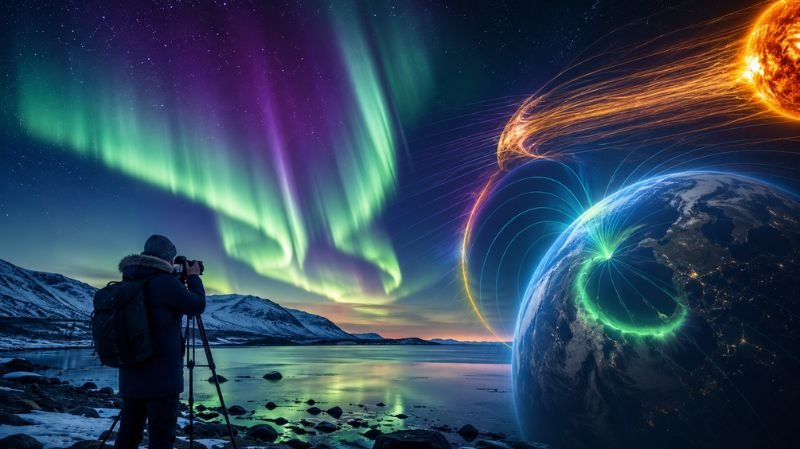
The auroral oval sits, on average, between 65 and 72 degrees north latitude — a zone that includes Northern Lights
Norway, Iceland, northern Finland and Sweden, Greenland, Canada’s Yukon and Northwest Territories, and Alaska. These are the world’s prime aurora-viewing destinations, but not all of them are equal.
Top Destinations Compared
- Tromsø, Norway: The most accessible aurora city in the world. Well-developed tourism infrastructure, dramatic fjord landscapes, and sufficient cloud-free nights. The Gulf Stream keeps temperatures milder than you might expect.
- Abisko, Sweden: A small national park famous for its microclimate. The surrounding mountains create a rain shadow that gives Abisko statistically higher rates of clear skies than almost anywhere else in the auroral zone — a significant advantage.
- Fairbanks, Alaska: Located almost directly beneath the auroral oval. Clear, cold winters and a long aurora season from late August through April. Less crowded than European destinations and excellent for combining with wilderness experiences.
- Yukon & Northwest Territories, Canada: Vast dark skies, minimal light pollution, and consistent positioning under the oval make this one of the best regions on Earth — but infrastructure is limited compared to Scandinavia.
- Iceland: Dramatic volcanic landscapes make for extraordinary foreground subjects. However, Iceland’s weather is notoriously unpredictable, and cloud cover can frustrate viewers for days at a time.
- Finnish Lapland: Offers unique “glass igloo” resort experiences and reliable snow cover for beautiful photography. The combination of reindeer, frozen lakes, and aurora views is unmatched.
Timing Your Visit
Auroras occur year-round at the poles, but they require darkness to be visible. Northern Lights this means the window runs from roughly late August through early April. The equinoxes in September and March coincide with increased geomagnetic activity due to the orientation of Earth’s magnetic field relative to the Sun — making these months particularly productive for aurora-chasers.
Within any given night, aurora activity is most likely to peak between 10 PM and 2 AM local time, when the sky is darkest. However, strong storms can produce displays at any hour. Getting well away from city Northern Lights, allowing your eyes 20 minutes to dark-adapt, and checking real-time forecasts all significantly improve your chances.
5. Myth, Folklore, and the Human Meaning of the Northern Lights
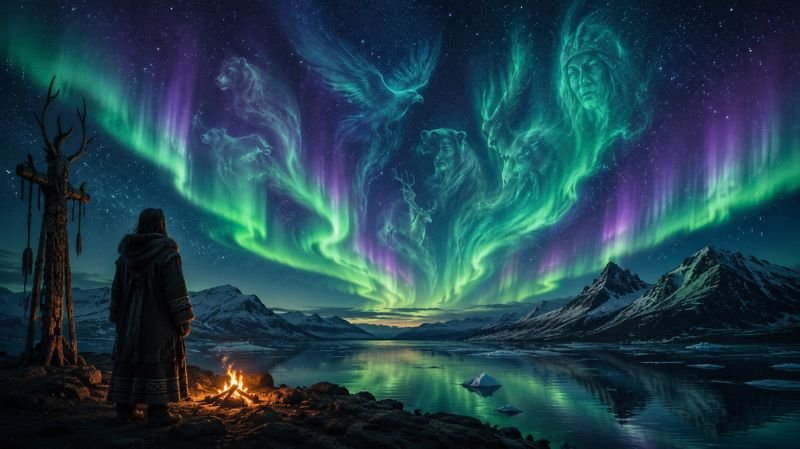
Long before physicists explained the aurora, it demanded explanation. The Northern Lights were too dramatic, too unpredictable, and too clearly significant to be left unaccounted for. Different cultures arrived at strikingly different interpretations, each one revealing something about how people understood their relationship with the cosmos.
In Norse tradition, the Northern Lights were believed to be the shimmer of armour worn by the Valkyries as they rode across the sky, choosing warriors from fallen battlefields to escort to Valhalla. For the Finnish, a fox of fire — the revontulet, literally “fire fox” — was said to run so fast across the snowy Arctic that its tail struck sparks from the mountain tops. Various Inuit communities interpreted the Northern Lights as the spirits of ancestors playing games in the sky, or as torches carried by the dead to guide the living.
Indigenous peoples across North America held diverse beliefs: some viewed the Northern Lights as signs of coming war or hardship; others saw them as benevolent ancestral presences. Scottish Highlanders called them the Na Fir Chlis — “the nimble men” — and associated them with celestial battles. In parts of medieval Europe, red auroras — rare and startling — were taken as omens of war or plague.
What strikes modern observers is not that these explanations were wrong, but how deeply they resonated with lived experienc of Northern Lights. The aurora is genuinely transformative. Even people who know exactly what is happening — the physics, the charged particles, the field lines — report feelings of awe and smallness that are not diminished by the science.
6. Why Space Weather Matters Beyond the Spectacle
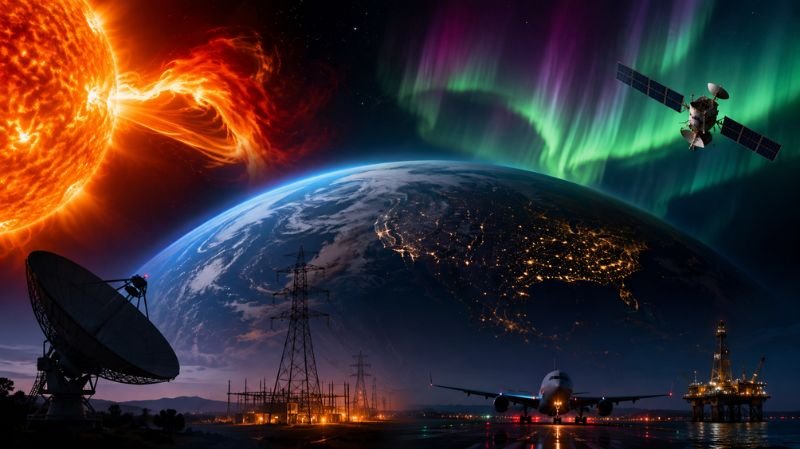
The same geomagnetic storms that produce the Northern Lights also have real and measurable effects on modern technological infrastructure. Understanding this connection is one reason aurora research attracts serious scientific investment.
During the Carrington Event of 1859 — the most powerful geomagnetic storm on record — telegraph wires across North America and Europe sparked, caught fire, and transmitted messages without operator assistance, powered entirely by the induced current from Earth’s fluctuating magnetic field. Today’s Northern Lights equivalent would be catastrophically disruptive. The same event in the modern era could damage or destroy large numbers of satellites, knock out GPS systems, disrupt aviation communications, and collapse electrical power grids across wide regions.
The March 1989 storm, which was far weaker than Carrington, knocked out the power grid across the Canadian province of Quebec for nine hours, leaving six million people without electricity. In 2024, a series of powerful CMEs caused widespread GPS disruptions, affected high-frequency radio communications used by aviation, and produced auroras visible across the southern United States and central Europe.
Space weather forecasting — Northern Lights monitoring the Sun for CMEs and solar flares, and issuing alerts when Earth-directed events are detected — Northern Lights has become critical infrastructure for governments, power companies, airline operators, and satellite operators. Auroras are the beautiful, visible face of a phenomenon with serious real-world consequences.
7. The Aurora You Can Hear
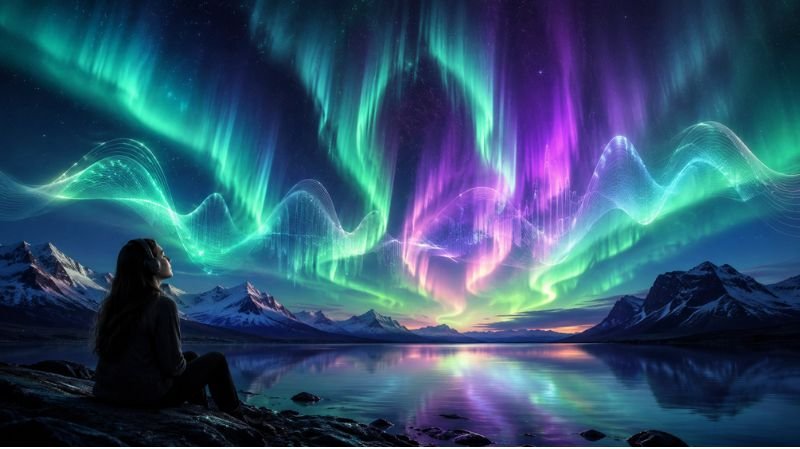
For centuries, indigenous communities across the Arctic reported that auroras produce sounds: soft crackling, hissing, or clapping noises that coincide with bright displays. Scientists were long sceptical, pointing out that auroras form at altitudes of 100 kilometres or more — far too high for sound waves to travel to the ground within the timeframe of the Northern Lights themselves.
Finnish researcher Unto Laine and his colleagues published research in 2012 confirming that these sounds are real. Northern Lights are generated not at the altitude of the aurora itself, but much closer to the ground — at around 70 metres — within a temperature inversion layer. During geomagnetic disturbances, the Northern Lights electrical charge differential between this atmospheric layer and the ground causes discharges that produce audible crackling or clapping sounds. The sounds are faint and easily missed, but on quiet nights in open terrain, they are real.
This discovery validated centuries of indigenous oral tradition and remains one of the more fascinating footnotes in aurora science.
Conclusion: The Universe at Your Doorstep
The Aurora Borealis is, in the most literal sense, cosmic. Northern Lights is the visible signature of processes that begin on the surface of a star 150 million kilometres away, travel through the vacuum of space, interact with an invisible planetary magnetic field, and finally resolve — with extraordinary elegance — into light visible to the naked eye on a cold, clear night.
No screen, photograph, or description does justice to the experience of standing beneath an active aurora. The scale is wrong in photographs. The motion is absent in paintings. The feeling of something alive and immense above you does not translate to any medium. It must be witnessed.
But knowing the science changes the experience too. When you understand that the green curtain above you is oxygen atoms emitting photons after being struck by electrons from a solar eruption two days earlier, the aurora stops being merely beautiful and becomes something richer: evidence of the dynamic, interconnected, and often violent universe that our small, magnetically shielded planet moves through. The Northern Lights are a reminder that we are not separate from space. We are inside it.
Frequently Asked Questions (FAQs)
What causes the Northern Lights?
The Northern Lights, or Aurora Borealis, are caused by charged particles from the Sun interacting with Earth’s magnetic field and atmosphere. When these particles collide with oxygen and nitrogen atoms, they release energy in the form of light, creating the colorful displays seen in polar regions.
Why are the Northern Lights usually green?
Green is the most common aurora color because it is produced by excited oxygen atoms approximately 100–250 kilometers above Earth’s surface. This wavelength is also one that human eyes detect particularly well in low-light conditions.
Can the Northern Lights really make sounds?
Yes. Although scientists were once skeptical, research has shown that some auroral displays can be accompanied by faint crackling, hissing, or popping sounds. These sounds are believed to originate from electrical discharges occurring close to the ground rather than from the aurora itself.
Where is the best place to see the Northern Lights?
Some of the best destinations for viewing the Northern Lights include Norway, Iceland, Sweden, Finland, Alaska, and northern Canada. These locations lie within or close to the auroral oval, where auroral activity is most frequent.
What is the best time of year to see the Northern Lights?
The best time to see the Northern Lights is between late August and early April when nights are dark enough for auroral displays to be visible. September and March are often considered especially favorable due to increased geomagnetic activity around the equinoxes.
What is the Kp Index?
The Kp Index is a scale that measures geomagnetic activity from 0 to 9. Higher Kp values indicate stronger geomagnetic storms and increase the likelihood of seeing auroras at lower latitudes.
Why do auroras appear in different colors?
Different colors are produced by different atmospheric gases and altitudes. Oxygen typically creates green and red auroras, while nitrogen produces blue, purple, and pink hues. The exact color depends on the type of gas and the energy of the collision.
Can you see the Northern Lights with the naked eye?
Yes. Under favorable conditions, auroras can be clearly visible to the naked eye. However, cameras often capture more vibrant colors and details because their sensors are more sensitive to low-light wavelengths than human vision.
Are the Northern Lights dangerous?
The auroras themselves are completely safe to observe. However, the geomagnetic storms that create them can affect satellites, GPS systems, radio communications, and electrical power grids.
How far south can the Northern Lights be seen?
During strong geomagnetic storms, the auroral oval expands southward. Powerful events have allowed people to see the Northern Lights in locations such as Texas, Spain, central Europe, and occasionally even northern parts of India.
Do the Southern Hemisphere have Northern Lights too?
Yes. The Southern Hemisphere experiences a similar phenomenon called the Aurora Australis, or Southern Lights. It occurs around the South Pole and is caused by the same solar and magnetic processes as the Aurora Borealis.
Why are scientists interested in studying auroras?
Auroras provide valuable insights into space weather, solar activity, Earth’s magnetosphere, and atmospheric physics. Studying them helps scientists better predict geomagnetic storms that can impact modern technology and infrastructure.
What are Birkeland currents?
Birkeland currents are powerful electrical currents that flow along Earth’s magnetic field lines between the magnetosphere and ionosphere. They play a major role in shaping the movement, brightness, and dynamic patterns of the aurora.
Can the Northern Lights be predicted?
While auroras cannot be predicted with complete certainty, scientists can forecast the likelihood of displays by monitoring solar activity, coronal mass ejections (CMEs), solar wind conditions, and geomagnetic indices such as the Kp Index.
What makes the Northern Lights so special?
The Northern Lights are unique because they represent a visible connection between the Sun and Earth. They transform invisible space weather processes into one of the most spectacular natural displays visible from our planet, combining science, beauty, and cultural significance.