Amanda Walker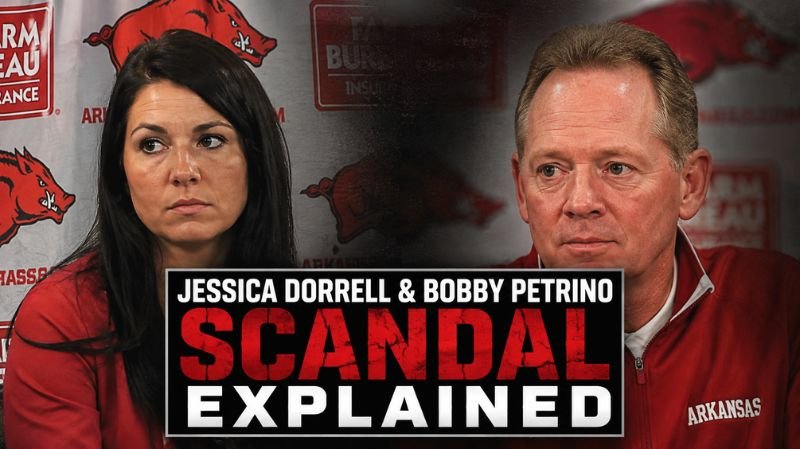
Introduction
On April 1, 2012, Bobby Petrino — the highly paid and nationally celebrated head football coach of the Arkansas Razorbacks — crashed his motorcycle on Arkansas Highway 16 near Morrow, Arkansas. What followed was not simply a story about a traffic accident. Over the next two weeks, it unraveled into one of the most damaging institutional scandals in NCAA football history, centered on a secret personal relationship, undisclosed hiring decisions, and a cascade of misleading statements to university officials.
At the center of the controversy was Jessica Dorrell — a former University of Arkansas volleyball player who had transitioned into an athletics administration role. Her name became nationally known almost overnight, not because of any professional achievement, but because of her connection to Petrino and the questions that connection raised about conflict of interest, institutional ethics, and favoritism in hiring.
This article presents the most thorough account of what actually happened — examining Dorrell’s background, the full timeline of events, the university’s internal investigation, the media and public reaction, and the long-term consequences for both individuals and for college athletics as a whole.
Who Is Jessica Dorrell? Background and Early Career
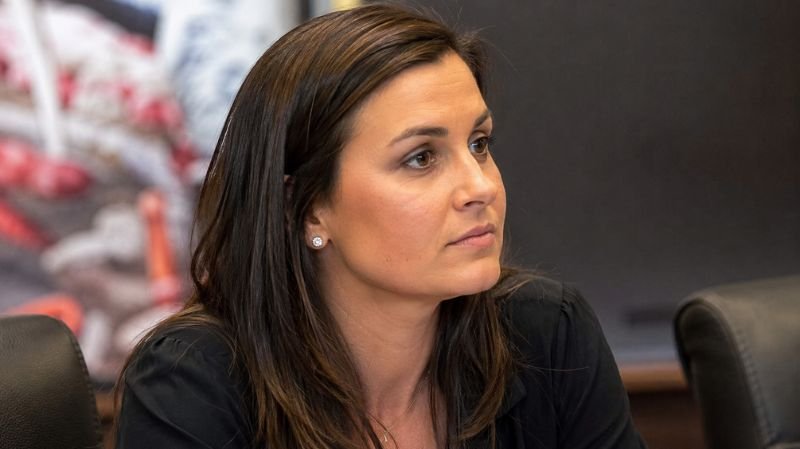
Jessica Dorrell was born and raised in Arkansas and attended the University of Arkansas in Fayetteville, where she played volleyball as a student-athlete. She was part of the Razorbacks volleyball program during her undergraduate years and was known within the tight-knit community of Arkansas athletics.
After graduating, Dorrell remained connected to the university rather than departing for opportunities elsewhere — a common path for former student-athletes who develop institutional loyalty and are drawn to careers in collegiate sports administration. She worked within the athletic department in various capacities and eventually moved into football operations, specifically in the area of recruiting.
By early 2012, Dorrell was engaged to be married to a former Arkansas football player. She had been working in the football program’s recruiting office and had built relationships with staff members across the department — including, critically, with Bobby Petrino himself.
On March 28, 2012 — just four days before the motorcycle accident — Dorrell was selected from a pool of reportedly more than 150 applicants to fill the newly created position of Student-Athlete Development Coordinator within the Razorbacks football program. The position came with an annual salary of $67,500 — an $11,000 increase over her previous university salary. The hiring process would later become one of the most scrutinized aspects of the entire controversy.
Bobby Petrino: The Coach at the Center of the Storm
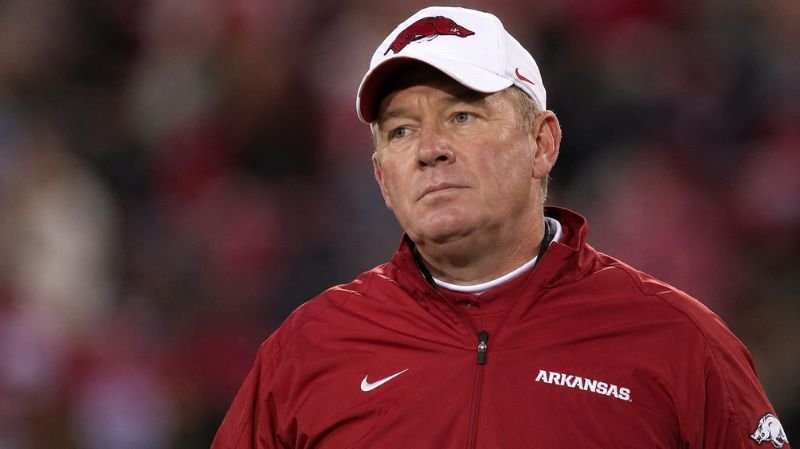
To understand why the scandal caused such widespread shock, it is essential to understand who Bobby Petrino was within the landscape of college football. Petrino was widely regarded as one of the most gifted offensive minds in the sport — a coach capable of transforming struggling programs into powerhouses almost overnight.
Before arriving in Fayetteville, Petrino had head coaching experience at the University of Louisville, where he compiled an impressive record. He was then hired by the NFL’s Atlanta Falcons in 2007, but left that position abruptly — and controversially — midway through the season to take the head coaching job at Louisiana State University. He ultimately went to Arkansas instead, joining the Razorbacks ahead of the 2008 season.
At Arkansas, Petrino quickly delivered results. By 2011, he led the Razorbacks to an 11-2 record, their best season in years. The team was ranked as high as fifth nationally and reached the BCS Cotton Bowl. Petrino had become one of the highest-paid coaches in the Southeastern Conference (SEC), earning approximately $3.53 million annually. He was considered the architect of a genuine Razorbacks renaissance.
It was this backdrop — a successful, highly compensated, and apparently indispensable coach — that made the events of April 2012 so jarring for the university, its fanbase, and the broader college football world.
The Motorcycle Accident: April 1, 2012
On the evening of April 1, 2012, Bobby Petrino was riding his Harley-Davidson motorcycle on Highway 16 in Washington County, Arkansas. The motorcycle left the road and crashed, leaving Petrino with four broken ribs, a broken vertebra in his neck, and cuts and bruises to his face. He was treated at Washington Regional Medical Center.
In the immediate aftermath, Petrino gave a statement to law enforcement and initially to the university claiming he had been riding alone. The Arkansas State Police released a report consistent with this account. University athletic director Jeff Long issued a statement expressing concern for Petrino’s recovery.
However, the Arkansas Democrat-Gazette, the state’s largest newspaper, began reporting that there were inconsistencies in the account of the accident. Within days, it emerged that a passenger had been on the motorcycle — and that passenger was Jessica Dorrell.
Faced with mounting pressure and the likelihood that the full story would soon become public, Petrino met privately with athletic director Jeff Long on April 7, 2012 — six days after the crash — and disclosed that Dorrell had been on the motorcycle with him, and that the two had been engaged in a personal relationship.
The Investigation: What the University Found
Athletic director Jeff Long immediately launched a formal internal investigation into the circumstances surrounding the accident, the nature of the relationship between Petrino and Dorrell, and most critically, the hiring process that had placed Dorrell in her new role just days before the crash.
The investigation uncovered several troubling facts. First, Petrino had not disclosed his personal relationship with Dorrell to university officials at any point before or during her hiring process — a disclosure that university policy required. Second, Petrino had provided Dorrell with a $20,000 personal cash gift in 2011, during the period of their relationship. Third, Petrino had actively advocated for Dorrell’s hiring in the student-athlete development role despite the undisclosed personal relationship.
Long also determined that Petrino had been misleading — both to law enforcement and to university officials — in his initial description of the accident. The combination of these factors created what Long described as a fundamental breakdown of institutional trust.
On April 10, 2012 — just nine days after the accident — Long announced that Bobby Petrino had been terminated as head football coach of the University of Arkansas.
At his press conference, Jeff Long made clear that the decision was not based solely on the personal relationship, but on Petrino’s pattern of dishonesty and his failure to uphold the ethical obligations of his position. Long stated that Petrino had violated his obligations as a leader, an employee, and a public representative of the University of Arkansas.
The Hiring Controversy: Was the Process Compromised?
Among all the revelations that emerged from the investigation, the hiring of Jessica Dorrell generated some of the most pointed criticism. The core concern was straightforward: had Dorrell received the Student-Athlete Development Coordinator position because of her relationship with the head coach rather than her qualifications?
The position had attracted more than 150 applicants, and Dorrell had been selected from that pool. Defenders of the hiring outcome noted that Dorrell had genuine experience within Arkansas athletics, a familiarity with the football program, and relevant background in student-athlete relations. However, critics argued that the process could not be considered fair or transparent given that the hiring manager — Petrino — had a personal financial and romantic relationship with the candidate that he chose not to disclose.
The $20,000 personal cash payment Petrino had made to Dorrell in 2011 added another layer of complexity to the scrutiny. While Petrino maintained it was a personal gift, critics pointed out that it represented a significant entanglement between a superior and a subordinate — or, in this case, a superior and a prospective employee — that clearly should have been disclosed to university administration.
The University of Arkansas does not appear to have publicly determined that the hiring itself was invalid or that Dorrell was unqualified for the role. The institutional failure, as Long framed it, was primarily attributed to Petrino’s failure to disclose rather than to Dorrell’s application or selection.
Jessica Dorrell’s Resignation and Settlement
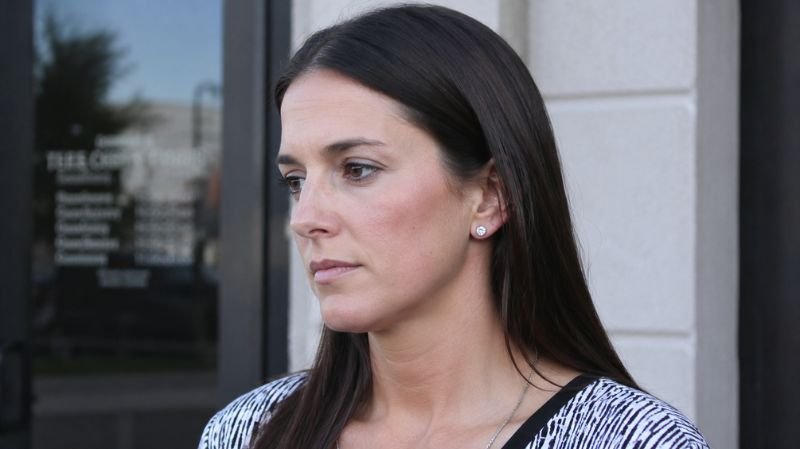
Following the eruption of the public scandal and the termination of Bobby Petrino, Jessica Dorrell submitted her resignation from the University of Arkansas. Given the intense media attention, the internal investigation, and the compromised nature of her position — having been hired by someone with whom she had an undisclosed personal relationship — remaining in the role was effectively untenable.
As part of her departure, Dorrell reportedly received a financial settlement from the university. The precise terms of that settlement were not made fully public, but reports at the time suggested it amounted to a modest sum — essentially a separation agreement rather than a significant payout. The university’s decision to offer a settlement reflected, in part, the legal complexity of a situation in which Dorrell’s employment had been entangled with Petrino’s undisclosed conduct.
Following her resignation, Dorrell almost entirely withdrew from public view. She did not give media interviews, did not issue public statements beyond what was necessary, and largely allowed the story to proceed without her active participation.
Media Coverage and Public Reaction
The scandal attracted enormous national media attention. ESPN ran multiple segments dissecting both the facts of the case and its implications for college football governance. National newspapers, sports networks, and online publications covered the story intensively through April and into May 2012.
A significant strand of media criticism — and one that gained traction in commentaries beyond the sports press — focused on the disproportionate scrutiny directed at Dorrell compared to Petrino. Petrino, as head coach, held institutional authority. He was the married party. He was the one who had made misrepresentations to police and university leadership. And yet a substantial portion of the online discourse assigned equal or greater blame to Jessica Dorrell.
Media scholars and commentators noted that the coverage of Jessica Dorrell fit a familiar pattern: women involved in workplace or sports scandals — regardless of their level of institutional power — tend to receive intense personal scrutiny, while male figures in positions of authority retain more narrative control over how their roles are characterized.
Razorbacks fans were divided. A vocal segment directed anger at Petrino for destroying a promising football program. Others, less charitably, focused their frustration on Jessica Dorrell. The university community was broadly shaken by revelations that cast doubt on the ethical standards of its flagship athletic program.
Aftermath: Bobby Petrino’s Career After Arkansas
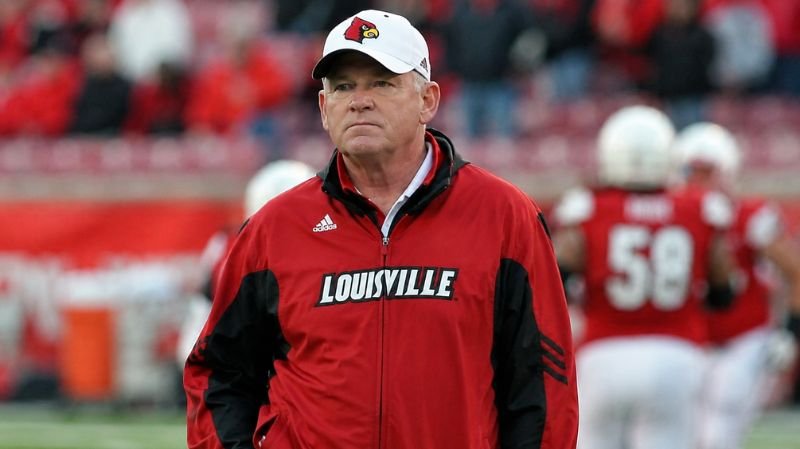
Unlike many coaches who face dismissal amid ethical controversies, Bobby Petrino did not disappear from football. In 2013, just one year after his firing, he was hired as the head coach at Western Kentucky University — a lower-profile program where he could rebuild some credibility. He delivered impressive results there, going 8-4 in the regular season.
In 2014, Petrino was hired as head coach at the University of Louisville — a Power Five program — marking a return to high-visibility college football. His tenure there was mixed, featuring some strong seasons before he was dismissed in 2018 following a period of poor on-field performance.
Petrino later returned to Western Kentucky and has continued to work in college football. His career trajectory illustrated a persistent critique within NCAA circles: that winning coaches are frequently given professional rehabilitation pathways following ethical violations that would effectively end careers in other fields.
Where Is Jessica Dorrell Now?
Since leaving the University of Arkansas in 2012, Jessica Dorrell has maintained a deliberate and consistent private life. No verified information about her current professional role, place of residence, or personal circumstances has been made publicly available.
Unlike Petrino — who was able to leverage his football expertise to re-enter the public professional sphere — Jessica Dorrell did not have a comparable high-profile professional identity prior to the scandal. Her public profile had been defined almost entirely by the controversy. Stepping away from public life was both a personal choice and, in many respects, the most practical option given the circumstances.
Her continued privacy has paradoxically kept public curiosity alive. More than a decade later, her name remains one of the more frequently searched subjects connected to the Arkansas program and to the broader topic of ethical failures in college athletics. The absence of a public narrative has left a vacuum that speculation continues to fill.
The Lasting Impact on College Athletics
The Arkansas scandal was not simply a story about two people and a motorcycle accident. It became a case study in institutional ethics that had measurable effects on how universities approach governance within their athletic departments.
Policy Changes Across NCAA Programs
In the years following the Arkansas incident, universities across the country strengthened or clarified their policies in several key areas:
- Mandatory disclosure of personal relationships between supervisors and subordinates — or between supervisors and candidates for employment
- Stricter conflict-of-interest review processes for hiring decisions within athletic departments
- Enhanced oversight of head coaches’ involvement in non-coaching staff selection
- Clearer ethical conduct standards written into employment contracts, with specific consequences for violations
- More rigorous internal investigation protocols when misconduct allegations emerge
The Financial Cost to Arkansas
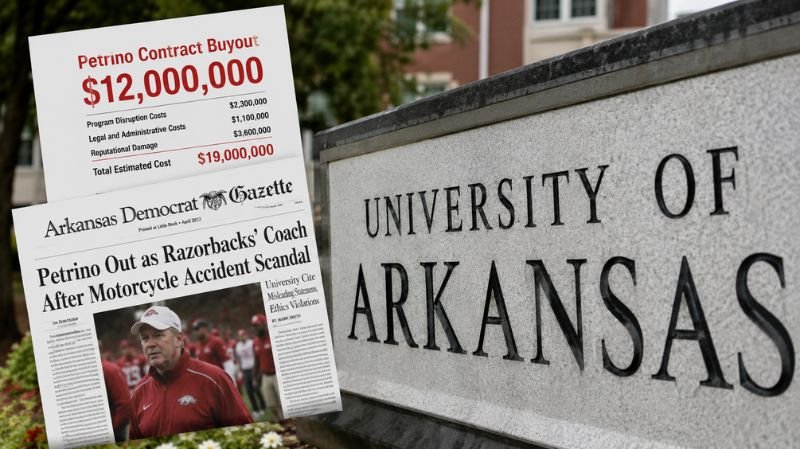
The financial consequences for the University of Arkansas were substantial. Petrino’s contract included a buyout clause, but because he was terminated for cause, the university was not obligated to pay the full buyout amount. However, the institution absorbed significant costs in legal review, administrative time, and reputational damage. The program spent subsequent years working to rebuild its national profile under replacement coaches.
A Broader Conversation About Gender and Accountability
The scandal also fed into ongoing conversations about how institutions and media assign responsibility in workplace misconduct cases. The asymmetry between how Petrino and Dorrell were ultimately treated — one returned to coaching, the other vanished from public professional life — raised legitimate questions about accountability, power, and gender dynamics in high-stakes professional sports environments.
Key Takeaways
- The April 1, 2012 motorcycle accident was not the cause of the scandal — it was the event that exposed a pre-existing situation involving an undisclosed relationship and a compromised hiring process.
- Petrino’s termination was driven primarily by his dishonesty — to law enforcement, to university officials, and in the hiring process — rather than by the relationship itself.
- Jessica Dorrell’s role was that of a junior staff member who had an undisclosed relationship with her institutional superior. The primary breach of university policy was Petrino’s failure to disclose.
- The $20,000 cash gift from Petrino to Dorrell in 2011 was a particularly troubling detail that suggested the relationship had influenced professional decisions even before the specific hiring at issue.
- The scandal produced meaningful changes in NCAA and university athletics governance policies, particularly around hiring transparency and relationship disclosure.
- The contrasting post-scandal trajectories of Petrino and Dorrell became a frequently cited example in discussions about gender, power, and professional accountability in college sports.
Frequently Asked Questions (FAQs)
Who is Jessica Dorrell?
Jessica Dorrell is a former University of Arkansas volleyball player and athletics department employee who became nationally known in April 2012 following revelations that she had been involved in a personal relationship with then-Arkansas head football coach Bobby Petrino. She had recently been hired as the Student-Athlete Development Coordinator for the football program — a hiring that became the subject of a conflict-of-interest investigation.
What exactly happened in the 2012 Arkansas scandal?
On April 1, 2012, Bobby Petrino crashed his motorcycle on Highway 16 in Washington County, Arkansas. He initially told police and university officials he had been riding alone. It was subsequently revealed that Jessica Dorrell — with whom he had a personal relationship — had been his passenger. An investigation by athletic director Jeff Long also uncovered that Petrino had given Dorrell a $20,000 personal cash gift in 2011 and had influenced her hiring for a university position without disclosing their relationship. Petrino was terminated on April 10, 2012.
Why was Bobby Petrino fired — was it just about the relationship?
No. Athletic director Jeff Long was clear that the relationship itself was not the primary reason for termination. Petrino was fired because he misled law enforcement and university officials about the circumstances of the accident, failed to disclose his personal relationship with Dorrell during her hiring process in violation of university policy, and had made a $20,000 personal cash payment to a subordinate/prospective employee without disclosure. The pattern of dishonesty and ethical violations was the stated basis for termination.
How many applicants applied for the position Dorrell was hired for?
Reports indicated that more than 150 people applied for the Student-Athlete Development Coordinator position. Dorrell was selected from this applicant pool. The legitimacy of the selection process was called into question because the decision-maker — Petrino — had an undisclosed personal and financial relationship with the successful candidate.
What was the $20,000 cash gift and why did it matter?
During the investigation, it was revealed that Petrino had given Dorrell $20,000 in personal cash in 2011 — while she was either working in the football program or being considered for a role in it. The payment was significant because it represented an undisclosed financial relationship between a head coach and a subordinate employee, which raised serious conflict-of-interest concerns independent of the romantic relationship.
Did Jessica Dorrell face any legal consequences?
No criminal charges were filed against Jessica Dorrell. She was not found to have violated any laws. She resigned from her university position and reportedly received a modest financial settlement as part of her departure agreement. The primary legal and institutional accountability fell on Bobby Petrino.
Did Bobby Petrino coach again after being fired from Arkansas?
Yes. Petrino was hired as head coach at Western Kentucky University in 2013, where he had a strong season. He then returned to a Power Five program when he was hired at the University of Louisville in 2014, where he coached until 2018. He subsequently returned to Western Kentucky. His ability to continue coaching at high-profile programs despite the circumstances of his Arkansas dismissal drew criticism from those who argued that winning coaches face insufficient accountability for ethical violations.
Where is Jessica Dorrell now?
Jessica Dorrell has maintained a consistently private life since her resignation from the University of Arkansas in 2012. No verified public information about her current professional role, location, or personal circumstances is available. She has not given media interviews or made public statements about the events of 2012 in the years since.
What changes did the scandal produce in college athletics governance?
The Arkansas case contributed to a broader movement within NCAA institutions to strengthen relationship disclosure policies, require more rigorous conflict-of-interest reviews in staff hiring, and hold head coaches to more explicit written ethical standards in their employment contracts. Many athletic departments revisited or updated their human resources policies in the aftermath of the controversy.
How is this case relevant to discussions about gender and accountability in sports?
The contrasting post-scandal trajectories of Petrino and Dorrell — one returning to high-profile coaching jobs, the other withdrawing permanently from public professional life — have been cited in academic and journalistic contexts as illustrative of how workplace scandals can affect men and women in institutional hierarchies very differently, even when the greater institutional responsibility belonged to the person in the higher-authority position.
Was Dorrell’s hiring considered invalid after the investigation?
The university’s investigation primarily focused on Petrino’s failure to disclose rather than on invalidating Dorrell’s selection. While the hiring process was clearly compromised by Petrino’s undisclosed role in advocating for Jessica Dorrell, the university’s public framing attributed the institutional breach to Petrino’s conduct rather than rendering a formal finding that Jessica Dorrell was unqualified or improperly selected solely on the merits.
Conclusion
The Jessica Dorrell story is, at its core, a story about institutional failure — about what happens when someone in a position of great authority chooses personal interest over professional obligation and then compounds the original mistake with dishonesty.
Bobby Petrino, by virtually every institutional measure, was the central actor: the married head coach who had the authority, the financial leverage, and the decision-making power. His choices — the undisclosed relationship, the $20,000 payment, the influence over a hiring process, and finally the lies told to police and to his own employer — constitute a clear and documented ethical failure at the highest level of his institution.
Jessica Dorrell, for her part, has never been given a full public forum to tell her own story. She resigned, accepted a settlement, and withdrew. The facts that are documented do not paint her as the architect of the situation she found herself in — but they also do not give us a complete picture of her perspective or her experience of the events that made her name nationally known.
What is certain is that the Arkansas scandal of 2012 produced a serious institutional reckoning — for the university, for the football program, and for college athletics broadly. It forced uncomfortable but necessary conversations about ethics, power, and accountability in one of America’s most culturally significant sporting institutions.
The enduring public curiosity about Jessica Dorrell suggests that people sense there is more to the story than was ever made fully public. Whether that fuller story will ever be told remains, more than a decade later, an open question.