Amanda Walker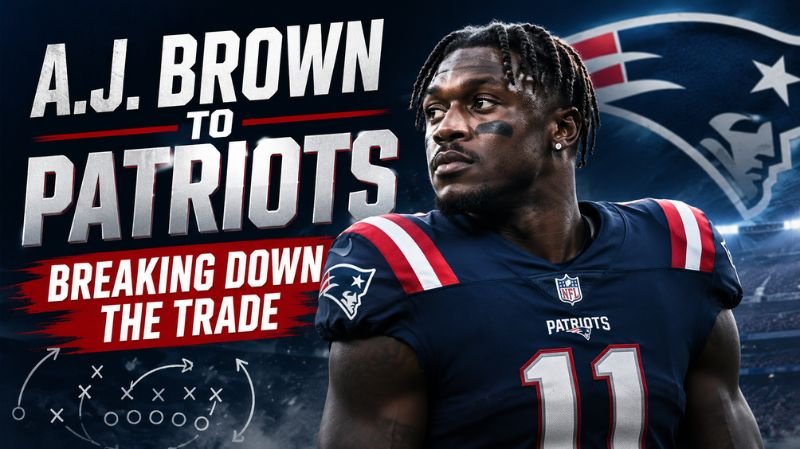
The trade that dominated NFL offseason conversation for months is finally official. The Philadelphia Eagles have sent wide receiver A.J. Brown to the New England Patriots in exchange for a 2028 first-round pick and a 2027 fifth-round selection — completing one of the most anticipated transactions in recent memory.
For A.J. Brown, it is a fresh start alongside a head coach he trusts and a young quarterback desperate for a go-to receiver. For Philadelphia, it is a calculated bet that future draft capital and a rebuilt receiver room can keep the Eagles among the NFC’s elite. And for Drake Maye, it is the moment the Patriots offense finally gets the weapon it has been missing.
This article breaks down how the trade came together, what the numbers actually tell us, and what both franchises should expect heading into 2026.
| TRADE AT A GLANCE
Eagles receive: 2028 First-Round Pick + 2027 Fifth-Round PickPatriots receive: WR A.J. Brown (age 29, entering Year 8)Contract: Brown owed $29M fully guaranteed in 2026 (4 years remaining) |
Who Is A.J. Brown? A Career Overview
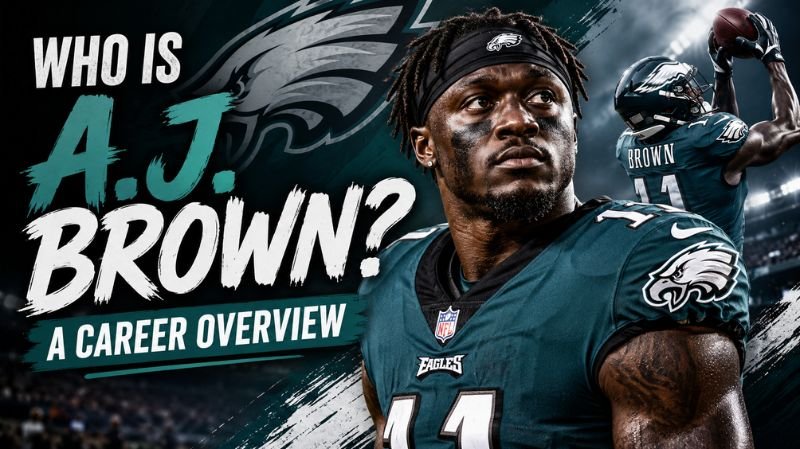
A.J. Brown Before unpacking why this trade happened, it’s worth understanding exactly what New England is getting — and what Philadelphia is giving up.
A.J. Brown was selected by the Tennessee Titans in the second round of the 2019 NFL Draft out of Ole Miss, going 51st overall. He immediately established himself as one of football’s most physically dominant receivers — a 6-foot, 226-pound target who combines contested-catch ability with surprising route-running refinement and yards-after-contact that offensive linemen envy.
His career numbers border on historic. He has eclipsed 1,000 receiving yards in six of his seven NFL seasons, earning three Pro Bowl selections and two second-team All-Pro honors along the way. In his four seasons with Philadelphia, he became the centerpiece of one of the NFL’s most dangerous offenses, helping the Eagles capture Super Bowl LIX in February 2025.
| Season | Rec. | Yards | TDs |
| 2019 (TEN) | 52 | 1,051 | 8 |
| 2020 (TEN) | 70 | 1,075 | 11 |
| 2021 (TEN) | 63 | 869 | 5 |
| 2022 (PHI) | 88 | 1,496 | 11 |
| 2023 (PHI) | 106 | 1,456 | 7 |
| 2024 (PHI) | 67 | 1,020 | 7 |
| 2025 (PHI) | 78 | 1,003 | 7 |
Even in a down year, Brown is a 1,000-yard receiver. That floor is rare — and it is exactly why New England was prepared to surrender a first-round pick to acquire him.
How the Trade Rumors Started

Trade speculation did not emerge in a vacuum. The seeds were planted during the 2025 season, when observers noticed a pattern of public frustration from Brown that grew increasingly difficult to ignore.
A.J. Brown 2025 campaign — while statistically acceptable — was defined as much by tension as production. He posted a career-low 12.9 yards per catch and openly vented his displeasure through social media and post-game comments, repeatedly voicing frustration with his role in the offense and his lack of involvement in key situations. His relationship with quarterback Jalen Hurts, once considered a cornerstone of the Eagles’ culture, visibly frayed. Drops at critical moments compounded an already uncomfortable situation.
The Four Factors That Made a Trade Inevitable
- Offensive Role Frustration: Brown wanted a larger target share than Philadelphia’s scheme was delivering. Despite his production, he felt underutilized — and said so publicly.
- The June 1 Salary-Cap Cliff: Trading before June 1 would have hit the Eagles with a $43.45 million dead-cap charge in a single season. By waiting, Philadelphia split that figure into $16.3 million in 2026 and $27.1 million in 2027 — a manageable spread that made the transaction financially viable.
- Philadelphia’s Preemptive Roster Moves: The Eagles did not wait for the trade to become official before rebuilding. They acquired wide receiver Dontayvion Wicks from Green Bay, signed Marquise Brown and Elijah Moore to one-year deals, and — most tellingly — traded up to the 20th pick in the 2026 NFL Draft to select Fred Biletnikoff Award winner Makai Lemon out of USC. The front office was clearly building for life after A.J. Brown.
- Brown’s Desire for a Fresh Start: Eagles GM Howie Roseman confirmed after the trade was finalized that Brown had expressed a desire to move on. Philadelphia chose to respect that wish — and to secure strong compensation in the process.
Why New England Was Always the Likely Destination
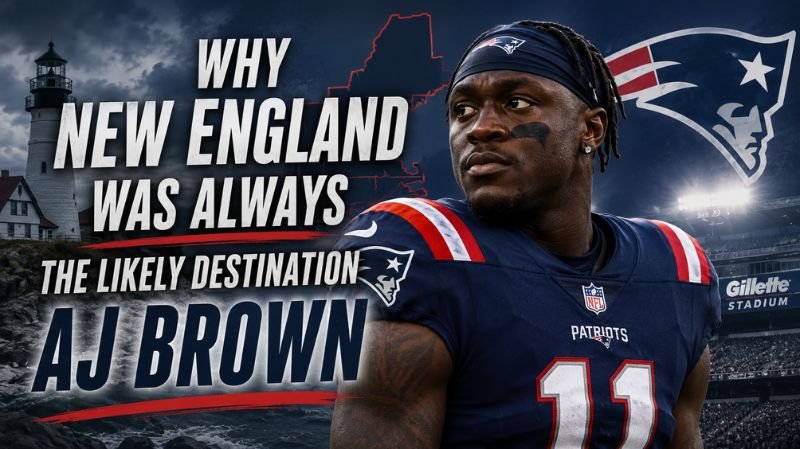
Throughout months of speculation, one team kept surfacing above all others: the New England Patriots. The fit was not coincidental.
The Mike Vrabel Factor
Patriots head coach Mike Vrabel drafted Brown in Tennessee and coached him for three seasons. The relationship between the two is well-documented — Vrabel has long viewed A.J. Brown as one of the NFL’s premier receivers, and A.J. Brown has spoken warmly about his time under Vrabel’s leadership. The moment Vrabel was hired in New England, league analysts immediately identified the Patriots as Brown’s most logical destination if a trade ever became realistic.
Drake Maye Needed This
The Patriots drafted Drake Maye to be their franchise quarterback, and Maye’s first season showed legitimate promise — he led the NFL in completion rate (72%) and yards per attempt (8.9) in 2025. But his supporting cast at receiver was not worthy of those numbers. New England released veteran Stefon Diggs in free agency and passed on drafting a receiver, clearly reserving that investment for a proven veteran.
Brown gives Maye something invaluable: a receiver who can win contested catches on third down, command safety attention that opens the rest of the field, and serve as an experienced mentor in high-leverage moments. The pairing is one of the offseason’s most compelling storylines.
The Financial Alignment
The cap math worked perfectly for New England. Maye is entering Year 3 of his rookie deal and will earn just under $10 million over the next two seasons — a figure that gives the Patriots enormous runway to absorb Brown’s contract. By contrast, Jalen Hurts will earn $103 million in cash over that same two-year window. The Eagles simply could not justify carrying both contracts simultaneously.
Brown is owed a fully guaranteed $29 million in 2026, with four years remaining on the deal he signed in 2024. The Patriots are inheriting that contract but have the cap structure to manage it — and the incentive to do so.
The Eagles’ Plan: A Complete Receiver Room Rebuild
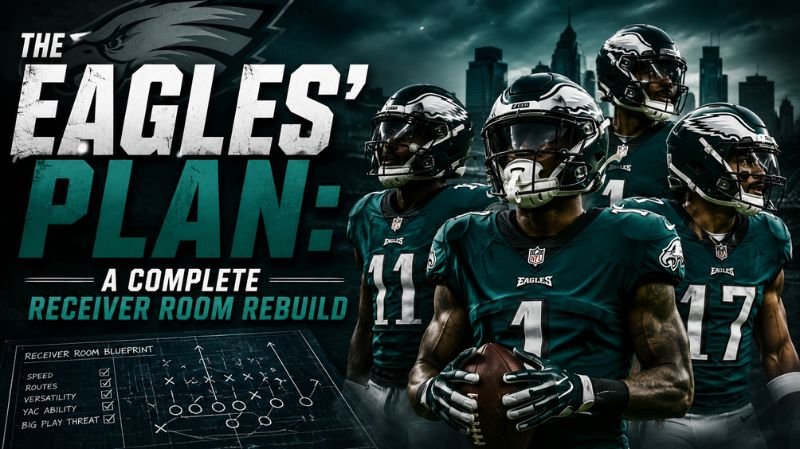
Trading a Pro Bowl receiver of Brown’s caliber is only defensible if there is a coherent plan to replace his production. Philadelphia’s front office has one.
DeVonta Smith Steps Into the No. 1 Role
Smith has operated as an elite No. 2 receiver throughout his Eagles career, posting consistent numbers alongside Brown. In 2026, he becomes the unquestioned WR1 for the first time since his rookie season. His target share has ranged between 22% and 29% across five seasons — expect that figure to rise significantly, along with increased scoring opportunities.
Makai Lemon — The Long-Term Investment
The Eagles’ decision to trade up to the 20th pick to select Lemon was a statement. Lemon won the 2025 Fred Biletnikoff Award at USC and earned unanimous All-American honors, establishing himself as the best college receiver in the country. He arrives in Philadelphia with the skill set to develop into a legitimate No. 1 target — not as a one-season band-aid, but as the centerpiece of a multi-year rebuild.
Depth Through Free Agency
Philadelphia signed Marquise Brown and Elijah Moore to one-year contracts, providing veteran depth and insurance while Lemon develops. The addition of Dontayvion Wicks — who played under new Eagles offensive coordinator Sean Mannion last season — adds a trusted piece to the puzzle. New tight end Eli Stowers, drafted in the second round, provides another dimension alongside Dallas Goedert.
| KEY SHIFT: Scheme Change Under Sean Mannion
The Eagles’ offense under Mannion is expected to move away from the one-on-one isolation approach that defined Brown and Smith’s partnership. The new system emphasizes timing routes and scheming players open — a style that may actually suit this rebuilt receiver room better than it would have suited Brown. |
Winners and Losers of the A.J. Brown Trade
| WINNERS | LOSERS |
| New England Patriots | Philadelphia’s Passing Game |
| A.J. Brown | Jalen Hurts’ Offensive Options |
| Drake Maye | AFC Defenses |
| Romeo Doubs (more space) | Other Patriots receivers (target share) |
New England Patriots — Clear Winner
The Patriots acquired one of the NFL’s most productive receivers without surrendering multiple premium picks. A 2028 first-rounder (which figures to land in the mid-to-late first round given New England’s improving trajectory) is significant compensation, but for a player of Brown’s caliber, it is a reasonable price. Brown instantly becomes the focal point of the passing attack.
A.J. Brown — Winner
A.J. Brown gets the fresh start he wanted, reunites with the coach who drafted him, and joins a team prepared to feature him prominently. Assuming he returns to his pre-2025 form, he should be one of the most productive receivers in the AFC.
Jalen Hurts — Uncertain
This is the most nuanced outcome of the trade. Hurts loses his most physically dominant offensive weapon while earning $51.5 million annually on his contract. The pressure on him to perform with a rebuilt, younger supporting cast is substantial. Whether he thrives or struggles in the new scheme is arguably the defining question of Philadelphia’s 2026 season.
Philadelphia’s Passing Game — Short-Term Loser
No receiver on the Eagles’ current roster matches Brown’s combination of size, experience, and playmaking ability. The team is betting on long-term upside through Lemon and future draft capital. Whether that bet pays off in 2026 or takes two or three seasons to materialize remains to be seen.
Fantasy Football Outlook for 2026
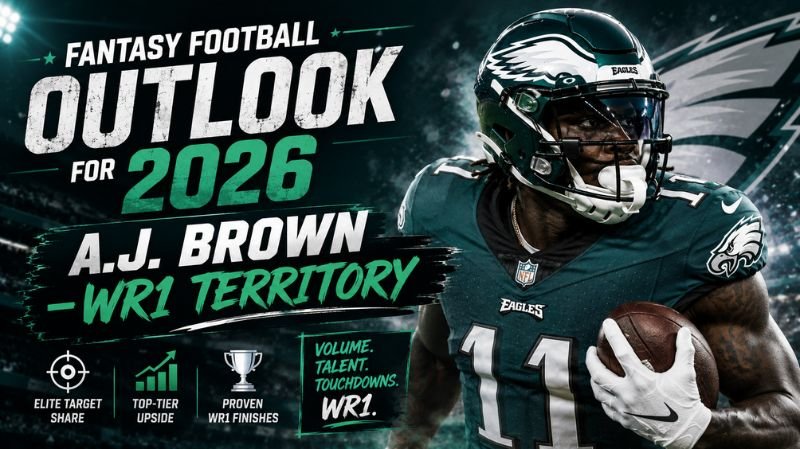
A.J. Brown — WR1 Territory
A.J. Brown is projected as the clear No. 1 target in New England’s passing game. He has finished no lower than seventh among all wide receivers in target share in each of the past seven seasons. With Maye throwing at an elite level and Brown as the primary option, his target share could reach career-high levels. Factor in that his quarterback situation is objectively better — Maye vs. a declining Hurts — and A.J. Brown is a strong WR1 candidate in any format.
Projection: 100-115 targets | 70+ receptions | 1,100+ yards | 8-10 TDs
Drake Maye — Significant Boost
Adding A.J. Brown fundamentally changes Maye’s fantasy ceiling. Quarterbacks who gain an elite receiver typically see immediate statistical improvement. Expect Maye’s touchdown numbers and overall efficiency to climb in 2026.
DeVonta Smith — Volume Increase, But Beware
Smith’s target share should rise substantially. However, defenses that previously split coverage resources between Brown and Smith will now concentrate more attention on Smith as the obvious No. 1. His yards-per-route efficiency may decline even as his raw target numbers increase. Project him as a high-end WR2 with WR1 upside.
Projection: 110-125 targets | 75+ receptions | 1,000-1,100 yards | 6-8 TDs
Romeo Doubs (Patriots) — Reduced Role
Doubs, who signed a four-year deal with New England in free agency, will see his target share compressed significantly with A.J. Brown commanding a dominant share of the offense. Project him for 85-95 targets rather than the 110+ he might have expected before the trade.
What This Trade Tells Us About the Modern NFL
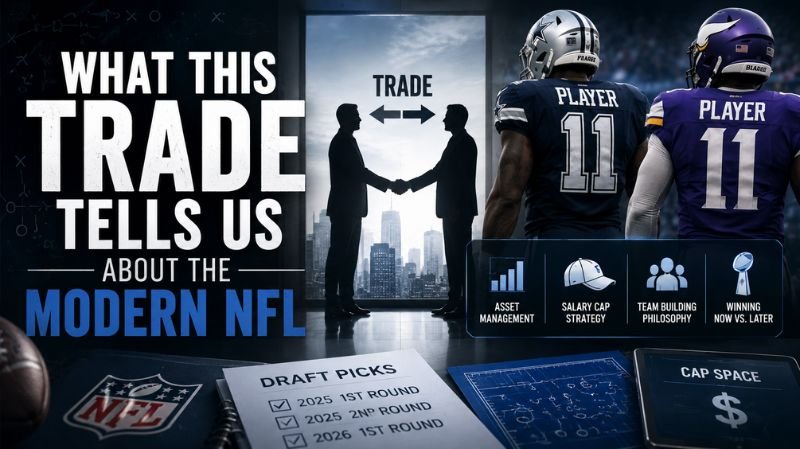
The A.J. Brown trade is not an isolated event — it reflects a structural reality of the salary-cap era. Teams are increasingly willing to move elite receivers when contract costs become significant, organizational priorities diverge, or relationships deteriorate. A.J. Brown departure follows a 2026 offseason that also saw DK Metcalf traded from Seattle to Pittsburgh and Jaylen Waddle dealt from Miami to Denver.
The pattern suggests that even the most productive receivers are not untouchable — and that front offices increasingly view trading a player at or near his peak for draft capital as a viable long-term strategy. Howie Roseman has built one of the NFL’s best drafting records in part through exactly this kind of move.
For the Patriots, the calculus is equally clear. Eliot Wolf’s front office is not in rebuild mode — New England reached the AFC Championship Game in 2025. Brown’s arrival signals genuine championship aspirations, not patience.
Final Verdict
The A.J. Brown trade is one of those rare offseason moves that reshapes two franchises simultaneously. Philadelphia walks away with cap flexibility, a potential franchise receiver in Makai Lemon, and a valuable 2028 first-round pick. New England walks away with one of the NFL’s most complete receivers, a proven weapon for Drake Maye, and legitimate Super Bowl aspirations.
Brown, now 29, is entering what should be the final peak years of his career. Whether he hoists another Lombardi Trophy in New England — or whether the Eagles eventually look back on this trade as the one that unlocked their next dynasty — will define the legacies of both organizations for years to come.
One thing is certain: A.J. Brown is still one of the most impactful players in professional football, and his move to Foxborough has made the AFC a considerably more dangerous place.